
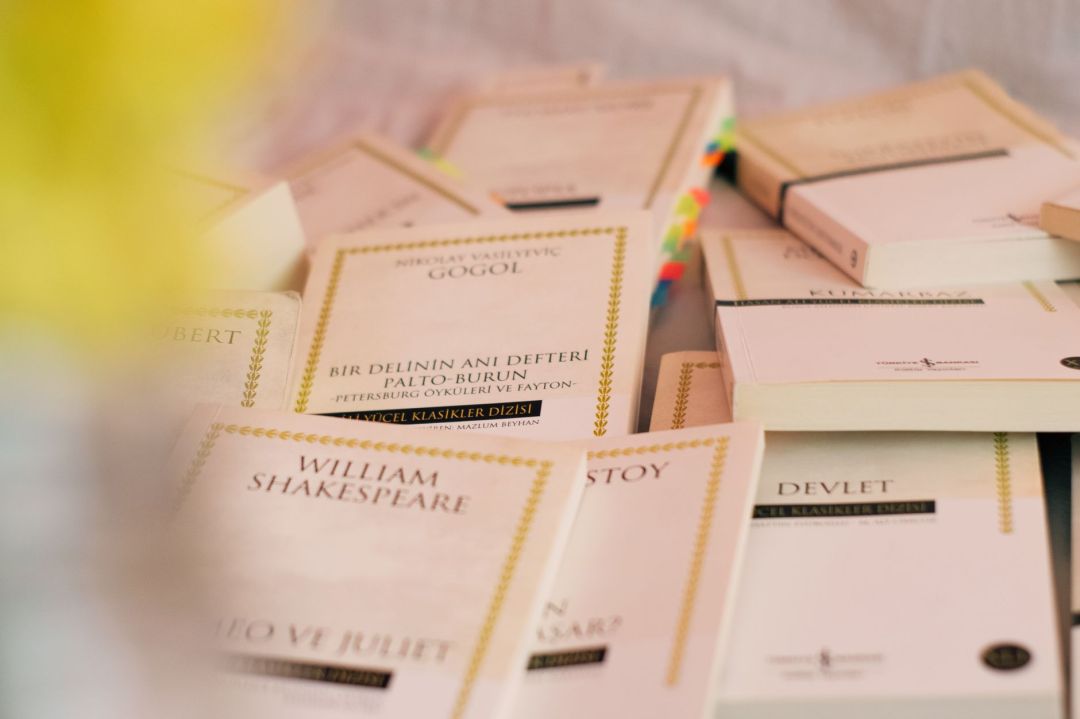
“How can I help my child with GCSE English?” is a question I hear unsuprisingly often! It can come from a parent whose child is dreading mock exams, or from one who knows their child has wonderful ideas but cannot seem to get them onto the page. It can come from a parent who loved English at school or from someone who’s not thought about a Shakespeare play in twenty years.
The temptation is to start with a revision guide, a list of “Grade 9 quotes” or a past paper. Any of those might eventually be useful. But first I would ask: what happens when your child tries to do the work?
One student can explain An Inspector Calls beautifully in conversation but struggles to write the first sentence. Another knows a dozen quotations, but uses them all to make the same point. A third student writes well at home but never finishes an exam answer. All three might worry they’re somehow “bad at English”, but they need quite different help.
To help your child with GCSE English: Find out your child’s exact exam board, papers and set texts. Look at a recent answer together and identify one specific obstacle. Then choose short, regular practice that addresses it. Your interest, your questions and your ability to keep things calm are valuable, even if you have never studied the books yourself.
Here’s eight steps to follow, to move beyond simply understanding the course to choosing the right practice and support for your child.

1. Understand the course: what is the syllabus for GCSE English?
In England, “GCSE English” usually refers to two separate qualifications: English Language and English Literature.
- English Language tests reading and writing skills through two papers: these usually cover Fiction in Paper 1 (with a comprehension and a creative writing task) and Non-Fiction in Paper 2 (with a comprehension and transactional writing task… think speeches, letters, articles and reviews).
- English Literature tests knowledge and interpretation of studied texts and poetry: this usually involves one Shakespeare play, one 19th-century novel, one modern novel or play, and a poetry anthology. Students are also asked to analyse unseen poems.
The exact question types, texts and assessment details depend on the exam board. You’ll need to know the board for each subject, as well as the school’s chosen texts and poetry cluster. This will likely be one of the following:
For example, AQA English Language has two written papers built around unseen reading and writing tasks, plus a separate spoken language endorsement. AQA English Literature has papers covering Shakespeare, a nineteenth-century novel, a modern text and poetry.
Step 1: Ask the school which specification to use, then bookmark that page.
I would ask the school for three things if you do not already have them: the exam board, the Literature set texts and anthology, a recent marked answer, and any forthcoming mock topics. This will let you research past papers and mark schemes, and start understanding exactly what your child has to do.
Put the information on one sheet: paper → question → what it asks → how long your child has. “Revise English” is enormous. “Practise explaining a writer’s choice in one paragraph” is a manageable starting point.
2. Find the sticking point: how can I help a child with GCSE English?
First and foremost, a parent can help by becoming an interested reader of your child’s work. Ask them to explain what they meant, notice where their spoken idea disappears from the written answer, and help them make the next task small enough to begin. You do not need to supply the “right” interpretation.
In a lesson, I want to hear what a student thinks before we spend too long discussing how an answer should look. Once they have explained an idea aloud, we work out how to carry it onto the page. At home, that might sound like: “Tell me your answer first. What is the most interesting thing you noticed?” You can write down their own sentence as they say it and let them decide how to develop it. This is particularly helpful when the blank page, rather than the book, is the problem.
Here is how I would read a recent answer with a parent and child:
| If you notice… | Try asking… | Then practise… |
|---|---|---|
| The answer retells the story | “What are you arguing about this character, beyond what happened?” | One sentence making a claim, followed by a moment that supports it. |
| It contains quotations but little explanation | “Why this particular word? Could it suggest anything else?” | Two different readings of one short phrase, using terminology to explain points. |
| They have good ideas aloud but little on paper | “Can you say your first point as if you were explaining it to me?” | An oral plan, then just the first paragraph. Bonus points for bringing-in context or author’s intent. |
| The last questions are unfinished | “Where did the time go, and what did you spend it on?” | One timed question, followed by a review of the pacing. |
| They cannot face opening the folder | “Which ten-minute job feels possible today?” | An agreed, limited task with a clear stopping point. For instance, lets choose 5 key quotes for Jekyll and Hyde. |
These are clues, not labels. If you’re unsure, ask the teacher: “Looking at this answer, what is the one change that would help most next time?” That tends to lead to more useful advice than asking, “How do we get the grade up?”
How can I use GCSE English mark schemes to help my child?
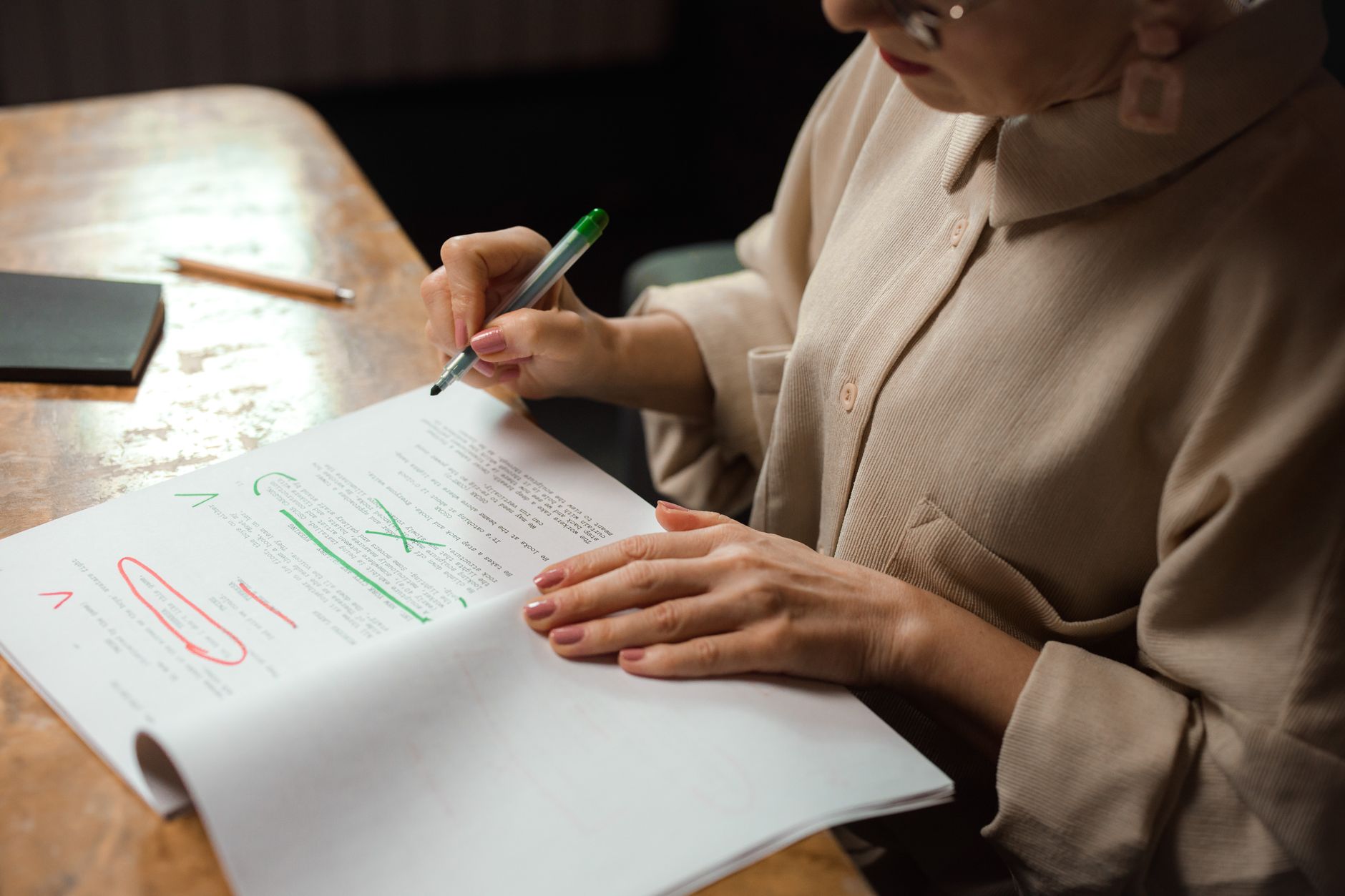
Use a mark scheme alongside an actual answer to identify the skill being assessed and one practical improvement. Take one question your child has already answered. Read its wording together, then look up the corresponding paper and mark scheme on the exam board’s site (that link is AQA’s finder; use your own board’s materials).
Does the question ask your child to explain, evaluate, compare, analyse or write for an audience? Where in their answer can you see them doing that?
You don’t need to translate every line of a mark scheme into a lesson. A much better question is, “Which bit of your answer are you most pleased with, and where did it become difficult?” Then compare that with the teacher’s comments. If the feedback says “develop your analysis”, ask what that would look like in this paragraph. A mark scheme becomes useful when it helps you spot something concrete your child can practise, rather than a collection of intimidating words.
Top tip: Check the examiner reports, too. These offer invaluable insights into common mistakes, what examiners really prize and how to prioritise the skills that will make the biggest difference to your child’s answers.
3. Follow an idea through the text: what is the best way to revise English Literature for GCSE?
The most effective Literature revision joins knowledge of the whole text to practice in answering unfamiliar questions. Your child needs to know what happens and how characters or ideas develop, but they also need to make a point about how and why the writer presents them.
Try a fifteen-minute thread exercise. Take a question such as “How does Priestley present responsibility?” Ask your child to find three moments from different parts of An Inspector Calls where somebody accepts, resists or rethinks responsibility. For each moment, ask what changes, which word or stage direction matters, and what an audience might be led to question. Only then pick a short quotation to support the point.
For Sheila, you could begin with her admission that she had Eva dismissed, move to her growing resistance to her parents’ evasions, and finish with her distress when they treat the possibility of a hoax as a reason to forget what happened. Ask: “By the end, is she worried about being caught, or about what they have done?” Your child now has something to argue.
This exercise helps them see the play’s movement: Sheila’s response is different from her parents’, and her own understanding changes. Your child is building an argument about the work as a whole. If they are studying Stevenson (for instance), my sample essay on secrecy in Jekyll and Hyde shows how one idea can run across a text. But whatever the text, the same method applies.
A parent can be very good at asking the slightly unexpected question: “Would you have trusted this character at the beginning?” or “Why tell us this now, rather than earlier?” You don’t need to know the answer beforehand. In fact, having to explain it to somebody who hasn’t studied the text can help your child find out whether their own point is clear.

4. Build a useful quotation bank: how many quotes do you need for GCSE English Literature?
There is no fixed number that guarantees a grade. Your child needs a usable selection of short, accurate quotations across the important characters, themes and stages of each text, alongside secure knowledge of the story. The requirements differ by board and question. For instance, AQA’s Literature papers are closed book, although necessary extracts or a named anthology poem appear in some questions.
As a starting exercise, I might ask a student to choose eight to twelve adaptable short phrases for a prose text or play. It’s a good way of exposing gaps, not an exam-board target. If all twelve are from the opening, or none helps with a major character, the selection needs work.
Poetry needs its own plan, particularly where a comparison poem must be recalled from memory… but more on this to follow!
How do you memorise quotes for English GCSE?
Keep it simple: practise recalling short quotations without looking, write them down, check them against the text, and revisit them on different days. Build up as you go along.
Alongside that recall practice, make a quotation map so your child remembers what the words can help them argue. Put a short phrase in the middle of a page and connect it to a character, two themes, its place in the text and a possible question. Let your child explain those connections aloud. Then cover the quotation, recall it accurately, and come back to it a few days later. Recall matters, but so does knowing when to use the words.
For example, they could connect the Inspector’s phrase “members of one body” to responsibility, inequality and the Birlings’ attempts to distance themselves from Eva. Ask why Priestley chooses the image of a shared body. What would it imply if one part were harmed while another insisted it was unaffected? That question takes them beyond identifying a metaphor and towards explaining its force… and that’s Grade 9 stuff.
If a child can recite a line perfectly but can only offer the same rehearsed sentence about it, I would ask a new question: “How might that phrase help if the question were about power instead of fear?” That is where a memorised quotation becomes flexible evidence.
5. Practise one skill at a time: how can I help my child improve GCSE English Language?
English Language can be a tricky one to “revise”, as it doesn’t have set texts like English Litereature. But the key here is focusing on skills rather than knowledge.
Practise repeatable skills, because the examination extracts themselves are unseen: reading the question carefully, selecting evidence, explaining a writer’s choices, comparing viewpoints and writing for a particular purpose.
So, what could this look like in practice?
Choose one small task from a recent paper: plan a response, write an opening, analyse one paragraph, or complete a single question in a sensible time. Always leave a few minutes to look at what could improve. Doing five questions without reviewing them may rehearse the same difficulty five times.
For writing practice, choose one thing to revise: make the audience clearer, replace an imprecise verb, or vary a sentence to change the pace. Your child should always be able to explain what the alteration does.
Full timed papers still matter as exams approach, because students need experience of moving between questions and sustaining their concentration. Short practice lets you work on a difficulty; a full paper helps show whether the improvement holds up across the exam. But find a balance that feels right for your child and their progress, rather than making every revision session a test.
If your child is told to analyse “language and structure”, ask what they noticed before asking for a technique name. “The writer hides who is at the door until the last line, so I wanted to keep reading” is already a useful observation about structure. Now they can turn it into an answer tied to the question…
Consider: If your child’s thinking is good but writing under time pressure is consistently difficult, tell their school what you’re seeing. Ask how this appears in class and what support they recommend. That conversation is worth having early, particularly if your child has dyslexia, ADHD, is autistic or suffers from anxiety.

6. Keep reading interesting: what books are taught in GCSE English Literature?
The school chooses its set texts from the exam board’s specification. Frequently taught works include Macbeth, Romeo & Juliet and Othello for Shakespeare. In terms of nineteenth-century novels, A Christmas Carol and The Strange Case of Dr Jekyll and Mr Hyde are common choices. An Inspector Calls and Lord of the Flies are two stalwarts for modern litereature.
But your child will study a selection, not every book on this list. So check with your school in the first instance.
What are some good books to read alongside GCSE English?
Quite simply, the best supplementary books for GCSE English are ones your child wants to read and talk about.
However, a connection with their set text can give that reading another purpose: noticing how two writers treat secrecy, power, responsibility or belonging can spark some interesting discussions.
For instance, if a student likes the mystery and Gothic atmosphere of Jekyll and Hyde, Arthur Conan Doyle’s The Hound of the Baskervilles could be a pleasure. If they are curious about what Lord of the Flies is arguing against, R. M. Ballantyne’s The Coral Island makes a fascinating, sometimes uncomfortable comparison. If the thwarted romance of Romeo and Juliet seems interesting, try the shakespeare-inspired Noughts and Crosses by Malorie Blackman.
But the best book is the one your child will actually pick up. A contemporary novel, a comic, a sports feature, a song or a game narrative can prompt a rich discussion: “Whose version of events do we believe?” “What made you change your mind?” “How did the writer make that sound convincing?” Reading widely gives them language and ideas to draw upon; it need not become one more item on a revision timetable.
7. Agree on manageable practice: how can we study GCSE English at home?
Agree on a small task and an end point before you start. “Shall I listen while you explain this poem, quiz you on five quotes, or leave you to do the paragraph and read it afterwards?” gives your child some control. A ten-minute conversation that ends well is more likely to happen again than an hour that ends with both of you exhausted.
Try to keep school feedback separate from your relationship with your child. If they show you a piece of work they’re feeling bad about (for example), begin with what they were trying to say. Correcting every sentence immediately can make it harder for them to show you the next one. When something is persistently difficult, seek precise help from their teacher or a specialist tutor rather than repeatedly reliving the same stuck point at home.

8. Ask for precise support: when might a GCSE English tutor help?
A GCSE English tutor may be useful when a specific difficulty persists despite feedback and practice, when your child needs more explanation than school can provide, or when a strong student needs greater challenge. Before arranging extra lessons, ask what they would help your child do differently.
If you’re considering a GCSE English tutor, describe the obstacle rather than only the desired grade: “She can discuss Macbeth in detail but writes very little in forty minutes” gives us somewhere to begin. And if you’re comparing English tutors online, ask how they would investigate that difficulty and what work they would use to judge progress. I explain how an online GCSE English lesson works in a separate guide.
I’ve written separately about when GCSE English tutoring is worth it, including situations where school support and well-chosen independent practice may be enough.
Where should I start this week?
Find out your child’s boards and texts. Ask to see one answer they would like to improve, and listen to what they meant to say. Choose just one follow-up: an oral plan, a quotation map, a stronger paragraph or a timed question. Ten or fifteen minutes is plenty for a first attempt. Notice what helped, and start from there next time.
GCSE English improves through many small acts of reading closely, thinking something through and finding the words to express it. You cannot do those things for your child. But you can absolutely make space for them, take your child’s ideas seriously and help them see that the next step is possible.
Interested in tuition?
I provide personalised academic support for English, History and Philosophy. Get in touch to discuss your course and how I can best support your studies.
I’m Amelia Carruthers, an experienced tutor and professional writer, with a background in publishing at Oxford University Press. I work as an online GCSE English tutor and also teach English Language and Literature in Stratford-upon-Avon and parts of Warwickshire. If you’d like to discuss what your child is finding difficult, get in touch and tell me a little about their course and their work.

