
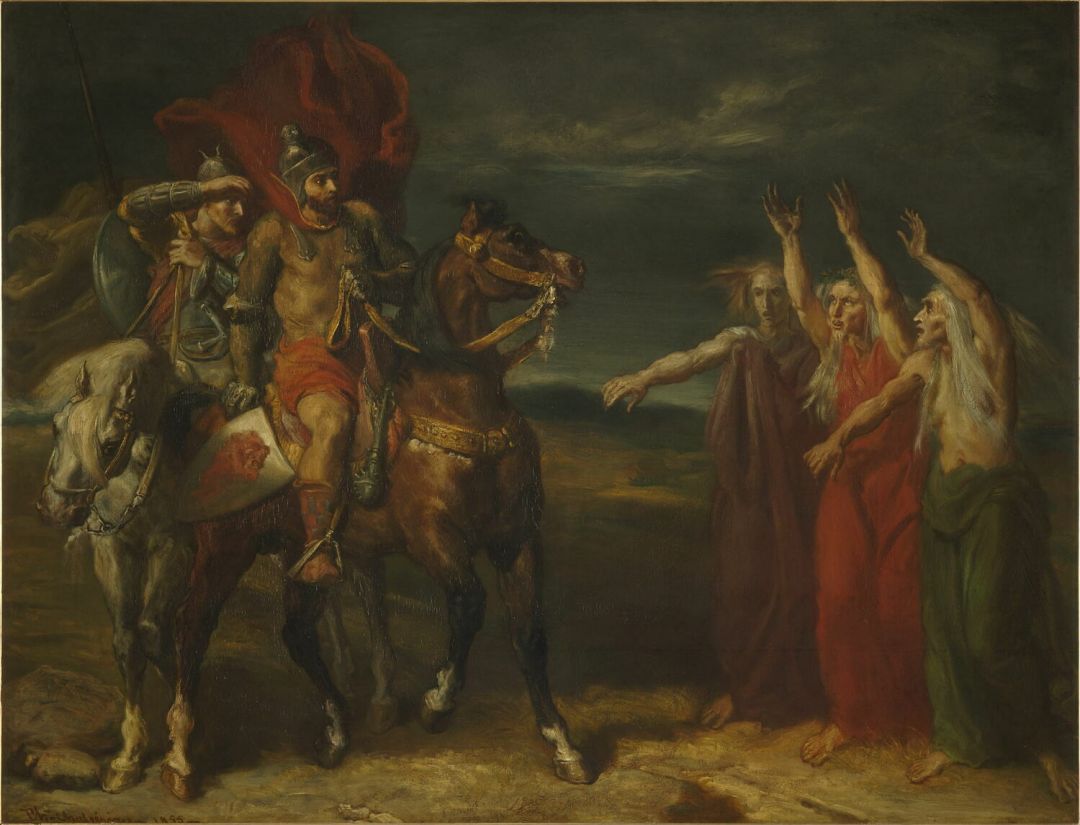
If you’re revising Macbeth, it’s very easy to end up with a list of disconnected facts: King James believed in witches; the Gunpowder Plot happened in 1605; people believed in the Divine Right of Kings; women were expected to be obedient. All true enough. But, on their own, those facts will not give you the edge in an essay. They become useful only when you connect them to Shakespeare’s choices.
And that’s exactly what we’ll do here.
Discover the historical, political, religious, social and literary context behind Macbeth, while always asking the question that really matters: what does this help us understand about the play?
Read on to understand how to turn that knowledge into the kind of precise, thoughtful analysis that lifts any GCSE essay up to Grade 9 – and gives A Level students a genuinely useful starting point.
What’s the historical context of Macbeth?
The most important historical context of Macbeth is that Shakespeare probably wrote the play in 1606, early in the reign of James I of England, who was also James VI of Scotland. It appeared soon after the Gunpowder Plot of 1605, at a time of intense anxiety about treason, kingship, religious conflict and witchcraft. Shakespeare drew heavily on Holinshed’s Chronicles (more on this to come), but changed his source material to make Duncan more saintly, Macbeth more tyrannical and Banquo more honourable.
That’s the short answer. The more interesting answer is that these contexts overlap.
Macbeth is not simply “about” witchcraft or the Divine Right of Kings. It is about what happens when human ambition meets supernatural temptation, when political violence is disguised as hospitality, and when a warrior who can defend a kingdom cannot govern himself.
Do you need context for Macbeth GCSE?
Yes. Context is assessed in GCSE English Literature, although the precise weighting and wording depend on your exam board.
Why? Well, good contextual understanding makes your interpretation sharper. It helps you explain why Shakespeare presents regicide as an offence against nature, why equivocation mattered in 1606, or why Lady Macbeth’s rejection of femininity would have appeared so disturbing. It’s a key skill for analysing texts of any type.
But what you don’t need is a mini history essay dropped into the middle of your paragraph.
Weak context sounds like this:
In Jacobean times, people believed in witches.
Useful context sounds like this:
By allowing the Witches to predict Macbeth’s rise without ever directly ordering Duncan’s murder, Shakespeare draws on Jacobean fears of demonic temptation while preserving Macbeth’s moral responsibility. The supernatural does not remove his free will; it reveals what he is willing to do with it.
The second version links context to method, character and meaning. That’s the goal throughout this guide. Think of context as a lens, not a fact dump.
Is Macbeth Jacobean or Elizabethan era?
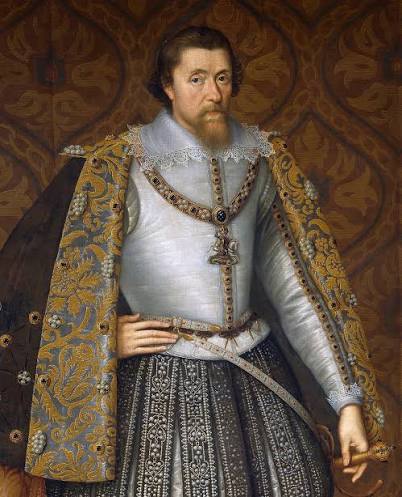
Macbeth is a Jacobean play. Elizabeth I died in 1603. James VI of Scotland then became James I of England, and the period of his English reign is known as the Jacobean era.
Shakespeare’s career bridged both reigns. In 1603, James took his company under royal patronage and it became the King’s Men. This matters because Macbeth clearly reflects interests and anxieties surrounding the new king: Scotland, royal succession, treason, witchcraft and the qualities of a rightful monarch.
That doesn’t mean the play is simply royal propaganda. Shakespeare’s treatment of kingship is more complicated than “Duncan good, Macbeth bad”. Duncan is gracious and generous, but he is also a poor judge of character. He trusted the former Thane of Cawdor and then places the same trust in Macbeth.
The play supports legitimate rule, but also asks what makes a ruler effective, how power should be transferred and whether violence becomes moral merely because the state authorises it.
Shakespeare, James I and the new royal court
James’s patronage gave Shakespeare’s company status, protection and opportunities to perform at court. Macbeth cannot be dated with complete certainty, but most scholars place it around 1606.
We shouldn’t claim that Shakespeare wrote it simply to please James, but the connections are difficult to miss. The play turns Scottish history into a drama about rightful succession, treats Banquo, from whom the Stuarts claimed descent, honourably, gives unusual prominence to witchcraft and presents regicide as both political catastrophe and spiritual violation…
James VI and I: why does the double title matter?
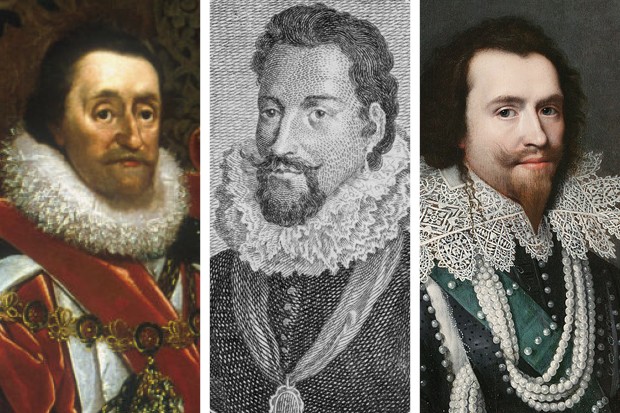
James had ruled Scotland as James VI before succeeding Elizabeth as James I of England in 1603. He now governed two kingdoms with different political and religious traditions, and he wanted a closer union between them.
For an English audience, Scotland was newly important but not necessarily familiar or comfortable. The play looks towards a future in which Scotland will be stable under Banquo’s descendants. That can flatter the Stuart dynasty, but it also explores the unease of joining English and Scottish identities under one monarch.
A Grade 9 thought: the play’s obsession with doubleness may have a political dimension. James is both James VI and James I. The kingdoms are separate yet joined. Macbeth is hero and traitor, host and murderer, “fair” and “foul”. Shakespeare makes unstable identity part of the play’s language as well as its politics.
Kingship, Divine Right and the Great Chain of Being
In Jacobean political thought, monarchy was not merely an administrative arrangement. James strongly defended the Divine Right of Kings: the belief that a monarch’s authority came from God and that subjects had no right simply to remove him. In The Trew Law of Free Monarchies, first published in 1598, James presented kings as appointed by God and accountable ultimately to God.
This makes regicide, the murder of a king, more than an ordinary crime. It is sacrilege: an attack on a ruler imagined as sacred.
Macduff’s response to Duncan’s murder makes this explicit:
“Most sacrilegious murder hath broke ope / The Lord’s anointed temple, and stole thence / The life o’ th’ building.”
The metaphor turns Duncan’s body into a consecrated building. “The Lord’s anointed” gives the king religious authority, while “temple” makes his flesh sacred space. Macbeth has not simply killed a man. He has broken into something belonging to God.
What was the Great Chain of Being?
The Great Chain of Being is a useful name for the hierarchical view of creation often associated with medieval and early modern Europe. God stood above angels, humans, animals, plants and minerals; within human society, the monarch stood above subjects. Each part of creation was expected to remain in its proper place.
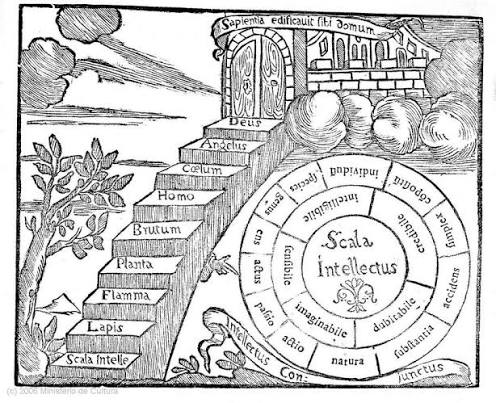
We should not pretend every Jacobean person held one identical, neatly diagrammed belief. However, the broader idea of a divinely ordered universe is helpful when reading Macbeth. By murdering Duncan and stealing the crown, Macbeth violates political, moral, familial and natural order at once. He is Duncan’s subject, kinsman and host, yet kills him while he sleeps.
The natural world seems to recoil:
- Darkness smothers daytime: “dark night strangles the travelling lamp”.
- An owl kills a falcon, reversing the expected hierarchy of birds.
- Duncan’s horses turn wild and, according to Ross and the Old Man, eat one another.
- Storms, screams and an earthquake accompany the night of the murder.
These aren’t just special effects. Nature becomes a moral barometer. The macrocosm (the larger universe), reflects the disorder inside the human and political microcosm.
How could you use this in a paragraph?
You might write:
Shakespeare presents Duncan’s murder as an offence against the structure of creation itself. After the regicide, “dark night strangles the travelling lamp”. The violent verb “strangles” transfers Macbeth’s murderous action into the natural world, while the obscuring of the sun suggests that legitimate authority has been unnaturally extinguished. For a Jacobean audience familiar with divinely ordered hierarchy, Macbeth’s seizure of the crown would therefore threaten far more than one royal family: it makes Scotland a world in which every proper relationship can be inverted.
Notice how the context is doing interpretive work rather than sitting separately at the end. That small difference is what separates a learned fact from a convincing argument.
Good kingship and tyranny
The contrast between Duncan and Macbeth matters, but Malcolm’s testing of Macduff in Act 4 gives us the play’s fullest definition of kingship. Malcolm lists “the king-becoming graces”:
“justice, verity, temperance, stableness, / Bounty, perseverance, mercy, lowliness, / Devotion, patience, courage, fortitude”
These qualities unite moral goodness with political endurance. A king must be truthful and merciful, but also stable and courageous. Macbeth has courage in abundance, yet lacks justice, temperance and mercy. Shakespeare therefore separates the qualities of a successful warrior from those of a successful ruler.
Here’s the more interesting point… At the start, Macbeth’s violence is celebrated because it serves Duncan. He “unseam’d” Macdonwald “from the nave to th’ chops” and is praised as “brave Macbeth”. Later, almost equally graphic violence makes him a tyrant. The action has not become more violent; its political and moral purpose has changed.
A Level extension: the play’s moral structure is intriguingly unstable. Violence is condemned when directed against the legitimate state, but honoured when used by that state. Macduff restores order by killing Macbeth, so political order is itself restored through bloodshed.
In Act 4, Edward the Confessor’s divinely sanctioned touch cures his subjects, while Macbeth’s rule infects Scotland. Shakespeare makes kingship physically felt: a good king heals the body politic; a tyrant makes it bleed.
Holinshed’s Chronicles and the historical Macbeth
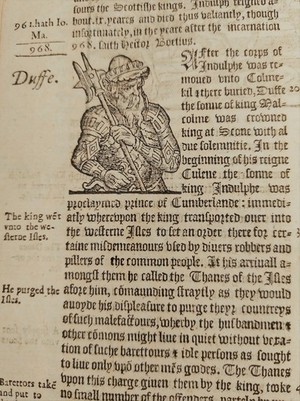
Shakespeare’s principal narrative source was Raphael Holinshed’s Chronicles of England, Scotland and Ireland, first published in 1577 and expanded in 1587. It was a large collaborative history rather than a modern, evidence-tested textbook, and much of its early Scottish material blended history and legend.
Shakespeare did not simply copy Holinshed. He selected, combined and transformed several stories to produce a much tighter tragedy.
How was the real Macbeth different?
The historical Macbeth, Mac Bethad mac Findlaich, became King of Scots in 1040 after Duncan died in battle – NOT as a sleeping guest murdered in Macbeth’s castle. He ruled until 1057 and appears to have had a largely stable reign. Holinshed’s Duncan is also less saintly than Shakespeare’s and his Macbeth begins as an able ruler before becoming cruel.
Why does that matter? Shakespeare sharpens the moral opposition. His Macbeth kills a gracious king and rapidly turns Scotland into a frightened surveillance state. The adaptation makes regicide less defensible and Macbeth’s fall more clearly tragic.
In an essay, the useful point is not simply that “Shakespeare changed history”, but what that change allows him to explore.
Shakespeare borrowed Duncan’s murder from a different story
Several details of Duncan’s murder come not from Holinshed’s Macbeth story, but from his account of King Duff. There, Donwald is urged on by his wife, gets the chamberlains drunk and murders the king in his castle. Afterwards, darkness and storms afflict the country.
Shakespeare effectively splices stories together. Source material is not a hidden “answer” behind the play; what matters is the choice he makes when adapting it. By intensifying Lady Macbeth’s role, for instance, he can explore cultural anxiety about a wife who overturns marital hierarchy, then show that neither spouse can command the psychological consequences of their crime.
Banquo, Fleance and the Stuart line
Holinshed presents Banquo as Macbeth’s accomplice. Shakespeare instead makes him Macbeth’s foil: exposed to the same prophecy, but far more cautious about the “instruments of darkness”.
Why make this change? James’s Stuart family claimed descent from Banquo through Fleance. The genealogy mattered as a dynastic story, so an honourable Banquo was politically tactful and the Witches’ vision of a line of kings offered an obvious compliment to James.
The change also improves the tragedy. Banquo proves that hearing a prophecy is not the same as obeying it. He is tempted, but does not choose Macbeth’s path.
When Banquo warns that:
“the instruments of darkness tell us truths, / Win us with honest trifles, to betray’s / In deepest consequence”
he understands what Macbeth refuses to see. The “honest trifle” is the bait; the “deepest consequence” is the trap.
Witchcraft, Daemonologie and Jacobean fear
In 1597, while still James VI of Scotland, James published Daemonologie, a dialogue defending belief in witchcraft. It was reprinted in England after his accession, and a new Witchcraft Act followed in 1604.
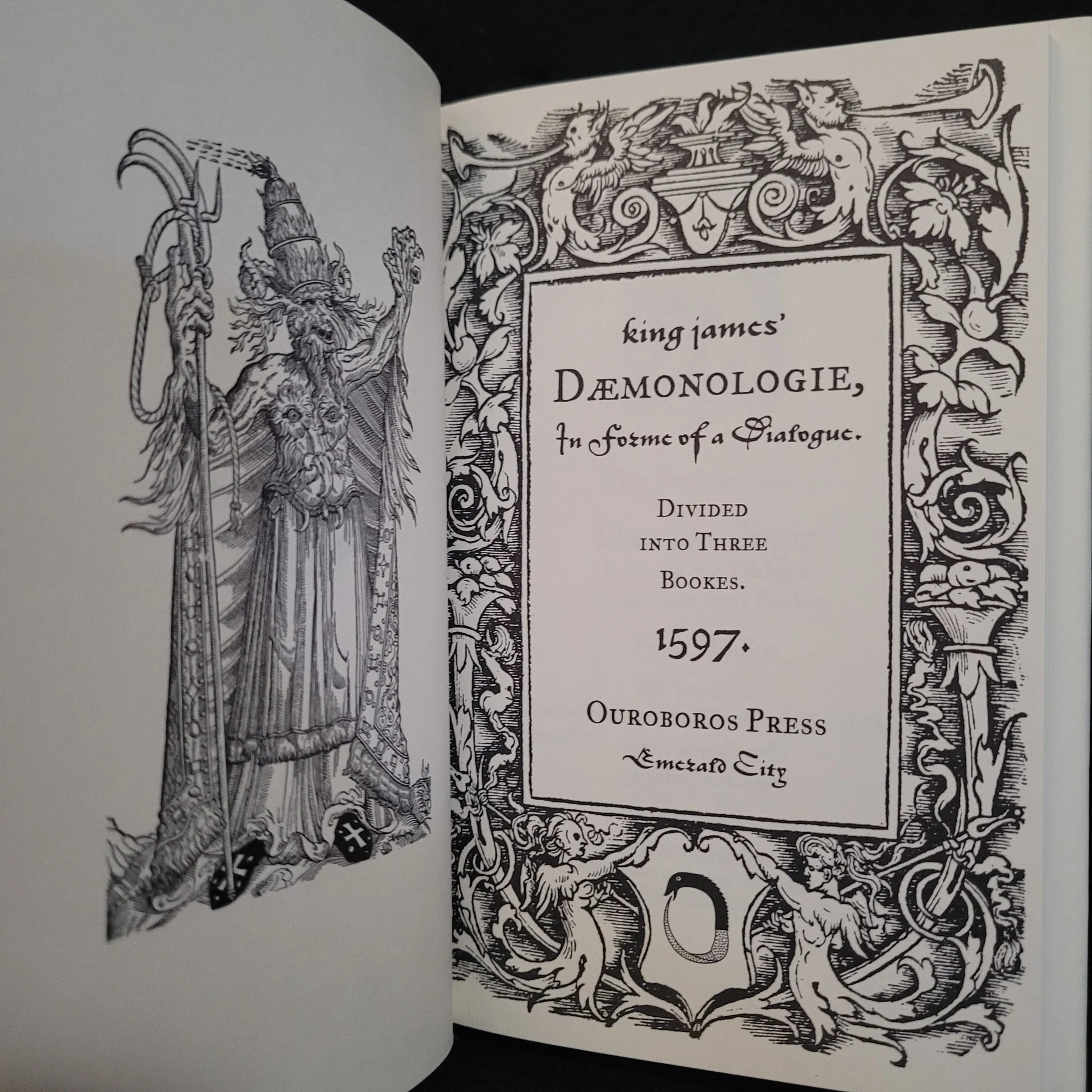
Not everybody in 1606 understood witchcraft in the same way: belief, scepticism and fear coexisted. Yet it had real legal consequences, and James’s interest made the subject particularly charged at court.
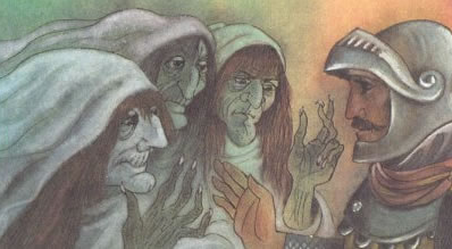
The Weird Sisters display features associated with early modern witch lore:
- They raise or predict storms and attack a sailor at sea.
- They possess animal familiars, including Graymalkin and Paddock.
- They chant, prepare a grotesque cauldron and produce apparitions.
- They speak in riddles and half-truths rather than direct commands.
The First Witch’s threat to “drain” the sailor “dry as hay” suggests exhaustion, sterility and the destruction of domestic life. Some critics also see sexual menace here, feeding into fears about strong women and the destruction of the “natural order” more generally.
Why are they called the Weird Sisters?
“Weird” did not simply mean strange. It was connected to the Old English wyrd, meaning fate or destiny, and early texts of the play use spellings that could also sound like “wayward”. The name therefore places the Sisters somewhere between witches, prophets and figures of fate.
This ambiguity is key. If they are embodiments of fate, they seem to announce a future already fixed. If they are “wayward” tempters, Macbeth’s response becomes more clearly a moral choice. Shakespeare never settles the question completely, which is one reason the play’s debate about fate and free will remains so rich.
Are the Witches responsible for Macbeth’s actions?
No. They influence Macbeth, but they do not instruct him to murder Duncan. This distinction is central to the play.
The first prophecy comes true without Macbeth doing anything: Ross announces that he is Thane of Cawdor. That “earnest of success” tempts him to believe the crown might also arrive by itself:
“If chance will have me king, why, chance may crown me, / Without my stir.”
But he does stir. “Chance” is initially the agent that might “crown” him; later Macbeth becomes the agent and forces the future through murder. Shakespeare therefore preserves both supernatural danger and moral responsibility. The Witches exploit his desire, but do not put a dagger in his hand.
A Grade 9 argument: the play is less interested in whether the prophecies are “real” than in what Macbeth does when he believes them. His weakness is interpretive arrogance: he turns conditional, ambiguous language into certainty because certainty is what he wants.
The Gunpowder Plot and a culture of treason
On 5 November 1605, a group of English Catholics planned to blow up the House of Lords during the State Opening of Parliament, killing James I and much of the political establishment. Robert Catesby led the conspiracy; Guy Fawkes was discovered guarding the gunpowder.
The plot was followed by arrests, executions, sermons and intense public discussion. If Macbeth was written around 1606, its first audiences saw a play about secretly murdering a king very soon after a real conspiracy had been uncovered.
That does not make every image in the play a coded reference to the Plot. But treason, hidden intentions and deceptive language would have carried an especially immediate force.
“Look like th’ innocent flower, but be the serpent under’t”
Lady Macbeth’s advice captures the logic of conspiracy: performance must hide intention.
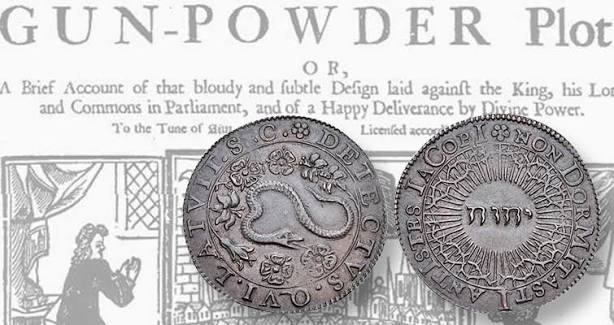
The serpent has obvious biblical associations with Satan and temptation. There may also be a topical echo: a 1605 medal commemorating the discovery of the Gunpowder Plot showed a snake among lilies and roses. The connection is suggestive rather than provable, but gives Shakespeare’s image a striking contemporary resonance.
In an essay, you could keep both meanings alive:
Lady Macbeth’s imperative to “look like th’ innocent flower, / But be the serpent under’t” turns identity into a deliberate performance. The biblical “serpent” associates her plan with satanic temptation, while the image may also have recalled contemporary representations of the Gunpowder Plot, including a 1605 medal depicting a snake concealed among flowers. Shakespeare therefore makes the Macbeths’ private deception resemble both original sin and modern political treason.
Equivocation, Henry Garnet and language that “lies like truth”
Equivocation means using deliberately ambiguous language to conceal the truth without stating a straightforward lie. It became notorious after the Gunpowder Plot, particularly through the 1606 trial of the Jesuit priest Henry Garnet, who was closely associated with the practice.
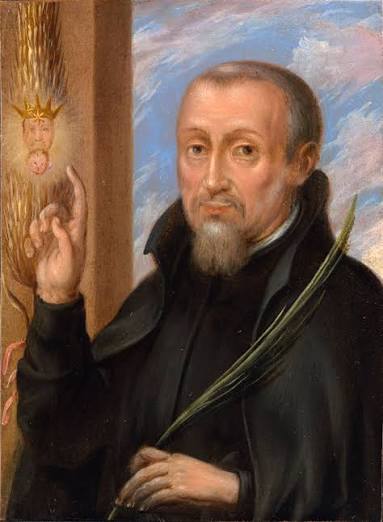
The Porter imagines admitting an “equivocator” to hell:
“Faith, here’s an equivocator, that could swear in both the scales against either scale; who committed treason enough for God’s sake, yet could not equivocate to heaven.”
The comedy is topical, but equivocation is also the Witches’ main weapon. Macbeth treats “none of woman born” and the moving of Birnam Wood as guarantees because their literal fulfilment seems impossible. In fact, branches conceal Malcolm’s army and Macduff was “from his mother’s womb / Untimely ripp’d”.
The prophecies are technically true but functionally deceptive. Macbeth finally recognises:
“the equivocation of the fiend / That lies like truth”
That phrase almost summarises the play. “Fair is foul” is not only an atmosphere; it is a method of communication. Language can be factually accurate and morally false.
A Level extension: Macbeth is not merely a victim of equivocation. He becomes an equivocator himself. He hides murder beneath hospitality, tells Banquo to attend the feast while arranging his death, and instructs Lady Macbeth to be “innocent of the knowledge” of his next crime. The language that destroys him is also the language by which he rules.
What does “unsex me here” mean?
“Unsex me here” means that Lady Macbeth is asking supernatural spirits to strip away the qualities her culture associates with being female, particularly pity, tenderness and the capacity to nurture. She wants to be filled “top-full / Of direst cruelty” so that no remorse can interrupt her plan to murder Duncan.
It does not simply mean “turn me into a man”. Her language is more unsettling: she asks to be remade outside ordinary sex and human nature.
“Come, you spirits / That tend on mortal thoughts, unsex me here”
The imperatives “come”, “unsex”, “fill” and “make” sound like an incantation. She takes the commanding grammatical position, yet the speech also admits a lack: she believes she needs external powers before she can commit the violence she imagines.
The speech then perverts maternal imagery:
“Come to my woman’s breasts, / And take my milk for gall”
“Milk” suggests nurture, motherhood and life; “gall” suggests bitterness or poison. Lady Macbeth does not merely reject femininity. She imagines its life-giving symbols chemically transformed into their opposite.
Gender expectations and the Jacobean audience
Early modern English society was patriarchal. Women were expected to be obedient within marriage, and political authority was overwhelmingly male. Lady Macbeth’s forceful language, her attack on her husband’s masculinity and her invocation of spirits therefore overturn expected gender and marital hierarchies.
However, the play repeatedly questions what masculinity actually means.
Lady Macbeth equates manhood with violence:
“When you durst do it, then you were a man”
Macbeth initially offers a more ethical definition:
“I dare do all that may become a man; / Who dares do more is none.”
Here, masculinity has a moral boundary. A true man can be courageous without becoming inhuman. Lady Macbeth persuades Macbeth to cross that boundary, but the rest of the play does not simply prove her “masculine”. Instead, it shows the damage caused when both characters confuse emotional suppression with strength.
Macduff provides an alternative after learning that his family has been killed. Malcolm tells him to “dispute it like a man”, meaning take revenge. Macduff replies:
“I shall do so; / But I must also feel it as a man.”
That “also” is crucial. Courage and feeling can coexist. Macduff’s masculinity includes grief, love and action, while Macbeth’s empty violence leaves him isolated.
There is also a theatrical layer. Female roles on Shakespeare’s professional stage were performed by boys or young men. Lady Macbeth’s plea would therefore have been spoken through a male actor’s body performing femininity. That makes gender in the scene look even less fixed…
A model paragraph on “unsex me here”
Lady Macbeth’s command to the spirits to “unsex me here” presents gender as something she believes must be violently stripped away before she can act. The imperative “unsex” rejects the pity and nurture conventionally attached to Jacobean femininity, while “take my milk for gall” corrupts a symbol of motherhood into poison. Shakespeare would have made her rejection of expected female and marital obedience deeply transgressive for an early seventeenth-century audience. Yet the speech can also reveal insecurity rather than uncomplicated power: because Lady Macbeth asks supernatural forces to “fill” her with cruelty, she implicitly acknowledges that cruelty is not naturally complete within her. Her later sleepwalking exposes the conscience she tried, and failed, to erase.
Religion, sin and the breakdown of the self
Macbeth is saturated with Christian language: temptation, damnation, sacrilege, prayer and judgement. Macbeth knows the murder may have consequences in “the life to come”. Afterwards, he cannot say “Amen”.
Prayer would reconnect Macbeth with a spiritual community, but as the grooms bless themselves, the word sticks in his throat:
“I had most need of blessing, and ‘Amen’ / Stuck in my throat.”
The physical verb “stuck” makes guilt bodily. Macbeth has broken God’s law and feels cut off from the language through which forgiveness might be sought.
Sleep as innocence and grace
Macbeth then believes he hears a voice cry:
“Sleep no more! Macbeth does murder sleep”
Sleep is “the innocent sleep”, a natural restoration of body and mind. By murdering Duncan in sleep, Macbeth metaphorically murders his own peace. Lady Macbeth dismisses his fear, but her sleep later becomes the stage on which guilt returns.
Her compulsive “Out, damned spot!” is a grotesque parody of cleansing and confession. Earlier, “a little water” could supposedly clear the deed; by Act 5, no water can purify the mind. Blood has moved from physical evidence to psychological stain. Christian ideas of sin deepen the pattern, but it also works psychologically as a drama of intrusive memory, sleeplessness and repetition.
Macbeth as a tragedy
It is worth remembering the simplest piece of literary context: Macbeth is a tragedy. It roughly follows Aristotle’s rules on tragedy, with a few key elements…
- Hamartia means an error or “missing the mark”, although it is often called a tragic flaw. Macbeth’s error is more precise than ambition alone. It combines “vaulting ambition”, insecurity about masculinity, susceptibility to temptation and the belief that violence can control the future. He understands the case against murder, then acts against his own knowledge.
- Peripeteia is reversal. Macbeth reaches the throne, but the achievement begins his collapse: the power he expected to make him safe creates new threats.
- Anagnorisis is recognition. Macbeth finally understands that the “fiend” has deceived him, yet never fully admits that he accepted the deception because it flattered him.
- Catharsis describes tragedy’s production of pity and fear. By the end, Macbeth is unquestionably a tyrant, but Shakespeare preserves traces of the brave, imaginative man he once was. We fear what he becomes and pity the waste of what he could have been. That divided response is far more powerful than a simple story in which a villain is punished.
Fate, free will and the danger of interpretation
One of the richest debates in Macbeth is whether the hero is controlled by fate. The prophecies map a future that does happen, yet they do not dictate the route Macbeth chooses.
Shakespeare repeatedly places alternatives beside him:
- Banquo hears prophecy but distrusts it.
- Macbeth first imagines letting “chance” act, then chooses murder.
- Lady Macbeth influences him, but he constructs the arguments against the murder himself.
- The apparitions speak ambiguously, but Macbeth chooses the most reassuring interpretation.
The tragedy therefore sits between determinism and free will. Macbeth cannot control the future, but he remains responsible for the methods by which he tries.
Shakespeare presents prophecy not as a script that removes Macbeth’s agency, but as a test of interpretation. Macbeth falls because he repeatedly mistakes possibility for entitlement and ambiguity for certainty.
How to use Macbeth context without forcing it
The best context is short, specific and attached to a word, image, dramatic choice or character contrast.
Try this four-part approach:
- Make an argument. What is Shakespeare presenting?
- Analyse the evidence. Zoom in on the language, structure or stagecraft.
- Add the relevant context. Choose the one contextual idea that sharpens your point.
- Return to interpretation. Explain what the connection reveals.
For example:
Shakespeare presents Macbeth’s kingship as sterile rather than generative. His “fruitless crown” and “barren sceptre” use the semantic field of infertility to show that he can possess royal objects but cannot establish a future dynasty. This would have resonated in a culture intensely concerned with succession, particularly under James I, whose Stuart ancestry was celebrated through Banquo’s promised line. Macbeth’s envy of Banquo therefore exposes the difference between seizing power and possessing legitimate continuity.
The paragraph does not say “this would make a Jacobean audience shocked” and stop. It explains why the context changes the meaning of the image.
Context questions to ask yourself
When revising a quotation, ask:
- What belief or anxiety does this language draw upon?
- Has Shakespeare followed or changed his source?
- Would this moment flatter, reassure or unsettle James’s court?
- Does the context create an interesting tension?
- Why is this contextual detail relevant to this exact word or moment?
If you can’t answer the final question, leave the context out.
Four Grade 9 context links you can adapt
1. Kingship and nature
Quotation: “dark night strangles the travelling lamp”
Possible argument: Shakespeare makes the natural world reproduce the violence of regicide. The personification of night as a murderer suggests that Macbeth has inverted a divinely ordered hierarchy, while the hidden sun mirrors the temporary eclipse of legitimate kingship.
2. Gender and violence
Quotation: “When you durst do it, then you were a man”
Possible argument: Lady Macbeth weaponises patriarchal masculinity against her husband. Rather than simply behaving “like a man”, she exposes how a culture that equates manhood with violence can be manipulated. Macduff’s later insistence that he must “feel it as a man” offers a more humane alternative.
3. Witchcraft and responsibility
Quotation: “instruments of darkness tell us truths”
Possible argument: The Witches’ danger lies in partial truth, not straightforward falsehood. This fits Jacobean ideas of demonic temptation, but Banquo’s warning preserves free will: supernatural influence becomes destructive only when Macbeth chooses to treat it as authority.
4. Gunpowder Plot and equivocation
Quotation: “the equivocation of the fiend / That lies like truth”
Possible argument: Shakespeare transforms a highly topical controversy surrounding equivocation after the Gunpowder Plot into the central mechanism of Macbeth’s tragedy. The oxymoronic idea of something that “lies like truth” shows that literal accuracy can conceal moral deception.
Quick Macbeth context revision checklist
Before the exam, make sure you can explain and connect these ideas:
- Macbeth is Jacobean and was probably written around 1606.
- James VI of Scotland became James I of England in 1603 and patronised Shakespeare’s company.
- James defended divinely authorised monarchy and wrote about witchcraft.
- Regicide could be understood as both political treason and sacrilege.
- Disorder in nature reflects disorder in the state.
- Holinshed supplied Shakespeare’s main narrative material, but Shakespeare transformed it.
- Shakespeare made Banquo more honourable in a play written for the Stuart age.
- The Gunpowder Plot made secrecy, treason and equivocation urgently topical.
- Lady Macbeth’s language challenges gender expectations, but the play also questions violent definitions of manhood.
- Macbeth is a tragedy of ambition, agency, interpretation and failed self-knowledge.
If you can link each point to a quotation and an interpretive argument, you know the context rather than merely recognising it. That is exactly where stronger essays begin.
What is the context behind Macbeth? A final answer
The context behind Macbeth is a Jacobean world preoccupied with legitimate succession, treason, witchcraft, religious judgement and the behaviour of rulers. Shakespeare wrote under the patronage of the new Scottish king of England, drew on Holinshed’s semi-legendary history, and shaped the material in the shadow of the Gunpowder Plot.
But context is not a set of facts sitting outside the play. It is active inside Shakespeare’s imagery and drama. It is there when darkness strangles light, when a “serpent” hides beneath a flower, when the Witches tell truths that betray, when Lady Macbeth tries to turn milk into gall, and when a warrior discovers that a crown cannot make him a king.
That is ultimately how to use context at Grade 9 or A Level: not as background decoration, but as a way of seeing more in the words Shakespeare actually wrote.
A note from Amelia
If you know plenty of quotations but struggle to turn them into a confident argument, you’re not alone. That gap between knowing the play and writing persuasively about it is exactly what I work on with students. The trick is rarely to memorise fifty more facts. It is to choose the right detail, notice the right word and explain why the connection matters.
I am an English tutor, writer and editor with an MA from the University of St Andrews and an MPhil from the University of Bristol. I previously worked in digital marketing for the New Oxford Shakespeare at Oxford University Press. My aim is to help GCSE and A Level students develop the knowledge, independence and confidence to make genuinely thoughtful arguments of their own.
If you’d like help with your studies, get in touch today. Let’s talk!
 AC studies