

Golding wrote after Auschwitz, after Hiroshima, after total war exposed how fragile moral order was. He also wrote during the Cold War, when the threat of nuclear destruction hung over daily life. At the same time, he was responding to older traditions of British adventure fiction that imagined boys as naturally resourceful, decent and civilising. Lord of the Flies is a direct attack on that comforting fantasy.
William Golding’s Lord of the Flies, published in 1954, is one of the defining post-war British novels because it takes a simple premise: a group of schoolboys stranded on an island. But Golding turns this into a bleak philosophical meditation on evil, civilisation, fear and political power.
What makes the novel so powerful is that Golding isn’t interested in the island merely as an adventure setting. He uses it as a testing ground for ideas in the aftermath of the Second World War. The novel asks an unsettling question: what if the violence and barbarity people associate with dictators, armies or “other” societies are in fact latent within us all?
So, what should we know about the historical context to Lord of the Flies… and how can we use it to deepen our GCSE and A Level essay analysis?
Here’s all the context, and all the quotes you need to explain Lord of the Flies with confidence.
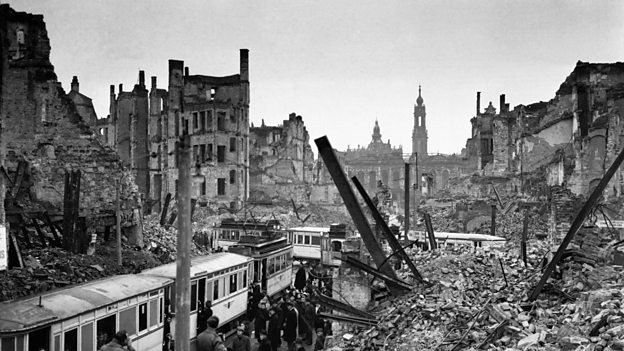
1. 1954: publication date and the post-war mood
The date 1954 matters.
It is less than ten years after the end of the Second World War, and Britain was still living with the psychological and material consequences. Cities bore the marks of bombing. Food rationing in Britain did not fully end until 1954, the year the novel was published. So Golding was writing for readers used to scarcity, damaged infrastructure and a culture of endurance rather than abundance.
- Thinking point: Think of it as the long shadow of war. What other references to shadows do you see in Lord of the Flies? Do a search in an online version of the book.
This helps explain why food and appetite are so central to the novel. Jack’s obsession with hunting is not just practical. It becomes psychological, then ideological. Golding writes that Jack is seized by “the compulsion to track down and kill.” In a culture emerging from wartime deprivation, meat carries symbolic weight. But Golding turns that context into something darker: hunger becomes a metaphor for the appetite for domination.
At the same time, the novel reflects a post-war collapse in confidence. Before the war, many people still clung to the idea that Western civilisation, especially British civilisation, represented moral progress. Golding no longer believed that. Ralph’s early confidence, “After all, we’re not savages,” sounds, in context, like a tragically naive statement.
Practice: How could you link these quotes to the post-war context?
- “We’ve got to have rules and obey them. After all, we’re not savages.” – Ralph’s insistence reflects the belief that civilisation naturally restrains violence; an assumption Golding dismantles.
- “The world, that understandable and lawful world, was slipping away.” – This line mirrors the post-war sense that moral order had collapsed after the atrocities of the 1940s.
- “Things are breaking up.” – Piggy recognises the collapse of social order, echoing anxieties in post-war Britain about stability and authority.
- “Ralph wept for the end of innocence, the darkness of man’s heart.” – The novel’s central statement about human nature, directly reflecting Golding’s post-war pessimism.
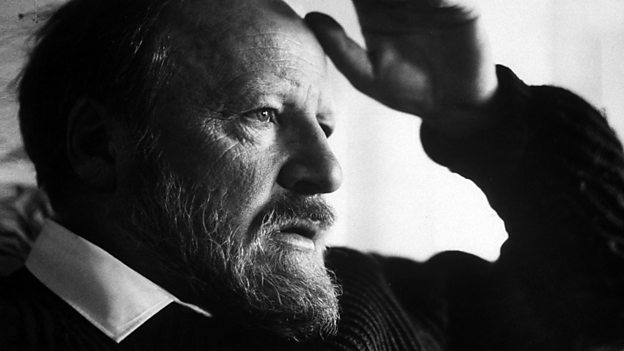
2. Golding’s war experience and his changed view of human nature
Golding was born in 1911 and came from an intellectually serious background. He studied at Oxford and taught Philosophy, English and Drama at Bishop Wordsworth’s School in Salisbury (a boys’ grammar school). This gave him intimate knowledge of adolescent group behaviour, competitiveness and cruelty – helping him portray the boys’ speech and behaviour with such precision.
But the decisive force in shaping Lord of the Flies was the Second World War. Golding served in the Royal Navy from 1940 and took part in active service, including involvement in the D-Day landings in 1944. He later said that before the war he had held “airy-fairy views” about human beings. After the war, he no longer believed that people were basically decent underneath social pressures. He had seen what ordinary people could do.
This biographical fact deepens the novel’s central idea that evil is not an exotic aberration. It is ordinary. It is human. It is close. That is why the novel is so careful not to make Jack a monster from the beginning. Roger too begins with residual social conditioning, throwing stones near Henry but not directly at him because “the taboo of the old life” still holds his arm back.
- Top-level point: The description of the “taboo of the old life” is brilliant. It implies that morality isn’t fully internalised goodness but often a restraint imposed by society. Once that restraint weakens, violence emerges.
The boys are a miniature version (a microcosm) of the adult world, not an escape from it.
Human Nature Quotes
- “The desire to squeeze and hurt was over-mastering.” – This moment reveals the sudden eruption of violence within Ralph himself.
- “Roger sharpened a stick at both ends.” – One of the darkest lines in the novel, suggesting deliberate cruelty and ritualistic violence.
- “Kill the pig. Cut her throat. Spill her blood.” – The chant demonstrates how collective violence becomes normalised through group psychology.
- “Maybe there is a beast… maybe it’s only us.” – Simon articulates Golding’s central idea that evil originates within human beings.
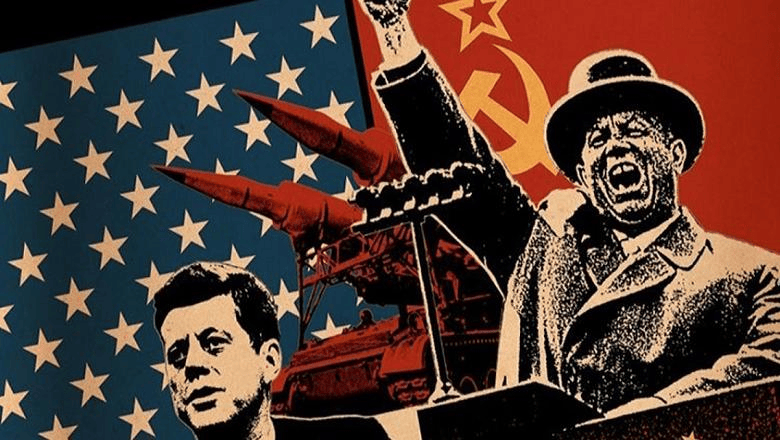
3. Cold War fear and the atomic backdrop
Golding’s island is not an isolated fantasy-world detached from history. The boys are on the island because they are being evacuated from a world at war, almost certainly a nuclear war. The “atom bomb” is mentioned very early, and that matters enormously. Golding frames the entire narrative with the possibility that civilisation beyond the island is already engaged in mass destruction.
The historical context here is the early Cold War. By the 1950s, fears of nuclear annihilation had become part of public consciousness. The United States and the Soviet Union were locked in ideological conflict, and the idea of total destruction, later condensed into the phrase Mutually Assured Destruction (or MAD), shaped the age.
- Top-level point: The novel mirrors that logic internally: the final fire risks destroying the island itself, so the boys’ “victory” would also be a kind of self-annihilation.
This adds force to the ending. The naval officer appears as an emblem of adult order, but he is in fact part of the same war-making world that produced the boys’ crisis. His question, “Having a war or something?”, is darkly comic and deeply ironic. The boys have indeed been “having a war”, but so has he.
Golding’s point is devastating: the island is not a fall away from civilisation into savagery. It is a reduced model of civilisation itself.
Cold War Quotes
- “About the atom bomb? They’re all dead.” – This early reference situates the novel within the nuclear anxiety of the 1950s.
- “A sign came down from the world of grown-ups.” – Refers to the dead parachutist — symbolising war literally falling onto the island.
- “The fire reached the coco-nut palms… the whole island was shuddering with flame.” – The island’s destruction mirrors the fear of global annihilation in nuclear war.
- “Having a war or something?” – The naval officer’s ironic remark connects the boys’ conflict to the adult world’s warfare.

Deep Dive: The Parachutist as a symbol
This context makes the parachutist especially significant.
On one level, he’s simply a dead airman whose body drifts onto the island and is mistaken for the beast. But contextually he does far more than that. He is the literal arrival of the adult world’s violence into the boys’ so-called paradise. He falls from the sky like a grotesque parody of an angel, but he brings not salvation but terror. Suspended on the mountain, animated by the wind, he becomes a false monster produced by war, fear and misrecognition.
The boys cannot interpret him accurately because fear transforms reality. Golding suggests that in times of social panic, people create beasts out of what they do not understand (think about the context of antisemitism in Hitler’s Germany). The “beast” is therefore partly internal evil and partly a political phenomenon: fear distorts perception, and distorted perception creates violence.
- “A sign came down from the world of grown-ups.” – The dead airman symbolises the adult war intruding into childhood.
- “The figure sat on the mountain, hunched.” – Fear transforms the parachutist into the imagined beast.
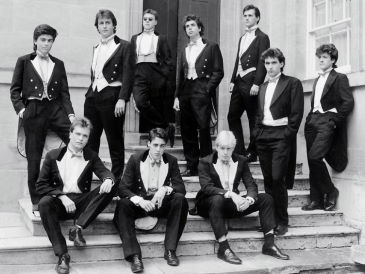
4. Britishness, class and the collapse of imperial confidence
The boys are not generic children. They are specifically English schoolboys. Golding is scrutinising a national myth: the lingering 1950s belief that British boys, because of education, discipline, Christianity and imperial culture, were naturally fitted to lead and civilise.
Earlier generations had been raised on the assumption that Britain’s ruling class possessed particular moral steadiness. Lord of the Flies attacks this. The boys speak the language of rules, assemblies and order. They hold the conch. They invoke school routines, even dressing themselves more formally before confronting Jack at Castle Rock.
Piggy embodies another aspect of this critique. He is rational, analytical and often right, but he is mocked because he lacks charisma, physical strength and social ease. His treatment exposes how quickly supposedly civilised groups can treat the vulnerable or the “other” with cruelty.
Civilisation Quotes
- “We’ll have rules!” he cried excitedly. “Lots of rules!” – The boys attempt to recreate the familiar structure of British institutions.
- “I ought to be chief… because I’m chapter chorister and head boy.” – Jack appeals to public-school hierarchy and institutional authority.
- “We’ll have ‘Hands up’ like at school.” – Shows how deeply the boys’ understanding of order is shaped by schooling.
- “Which is better – to have rules and agree, or to hunt and kill?” – Piggy articulates the central conflict between civilisation and barbarism.

Deep Dive: The Conch as a symbol
The conch, perhaps the novel’s clearest symbol of law and democratic speech, only works while people agree to believe in it. Once Jack rejects its authority, it becomes just a shell. Golding is not simply saying “rules are good”; he is showing that political order depends on collective consent. Institutions are fragile if human beings cease to honour them.
Its destruction alongside Piggy’s death is Golding’s way of showing that rational speech and vulnerable intelligence die together under authoritarian violence.
- “I’ll give the conch to the next person to speak.” – The conch establishes order and structured dialogue.
- “The conch exploded into a thousand white fragments.” – The destruction of the conch symbolises the death of civilisation.
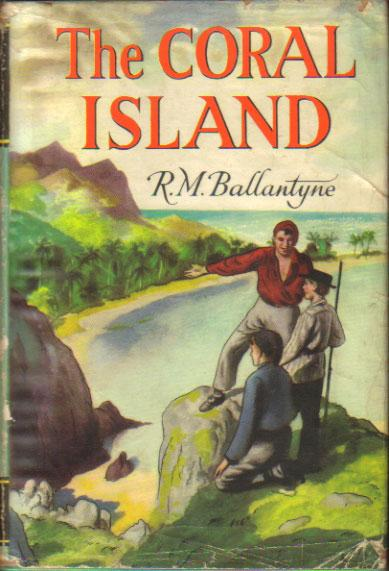
5. A reply to adventure fiction: The Coral Island and the breakdown of the imperial dream
One of the most important literary contexts is R. M. Ballantyne’s The Coral Island (1857), a Victorian adventure novel in which three boys, Ralph, Jack and Peterkin, are stranded on a tropical island and behave with courage, practicality and Christian morality. Golding deliberately echoes Ballantyne, even borrowing the names Ralph and Jack.
Victorian and Edwardian adventure stories often assumed that British boys carried civilisation within them. That tradition includes not just Coral Island but also books such as Robert Louis Stevenson’s Treasure Island (1883) and Arthur Ransome’s Swallows and Amazons (1930), which Golding references in the novel through the boys’ own reading.
- Key point: The novel is not only about boys on an island; it is about the death of literary and cultural innocence.
Golding’s island initially looks like an adventure novel, all “palm trees” and abundance, but he corrupts and subverts the genre from within. Instead of proving the resilience of civilisation, the island reveals how paper-thin it is.
Adventure Quotes
- “This is our island. It’s a good island. Until the grown-ups come to fetch us we’ll have fun.” – Ralph initially imagines the island as an exciting adventure.
- “There aren’t any grown-ups. We shall have to look after ourselves.” – The classic adventure premise, but Golding uses it to explore psychological collapse.
- “The island was getting worse and worse.” – A direct inversion of adventure narratives where islands become places of mastery.
- “The mask was a thing on its own, behind which Jack hid.” – Adventure heroes traditionally gain confidence; Jack instead loses moral restraint.
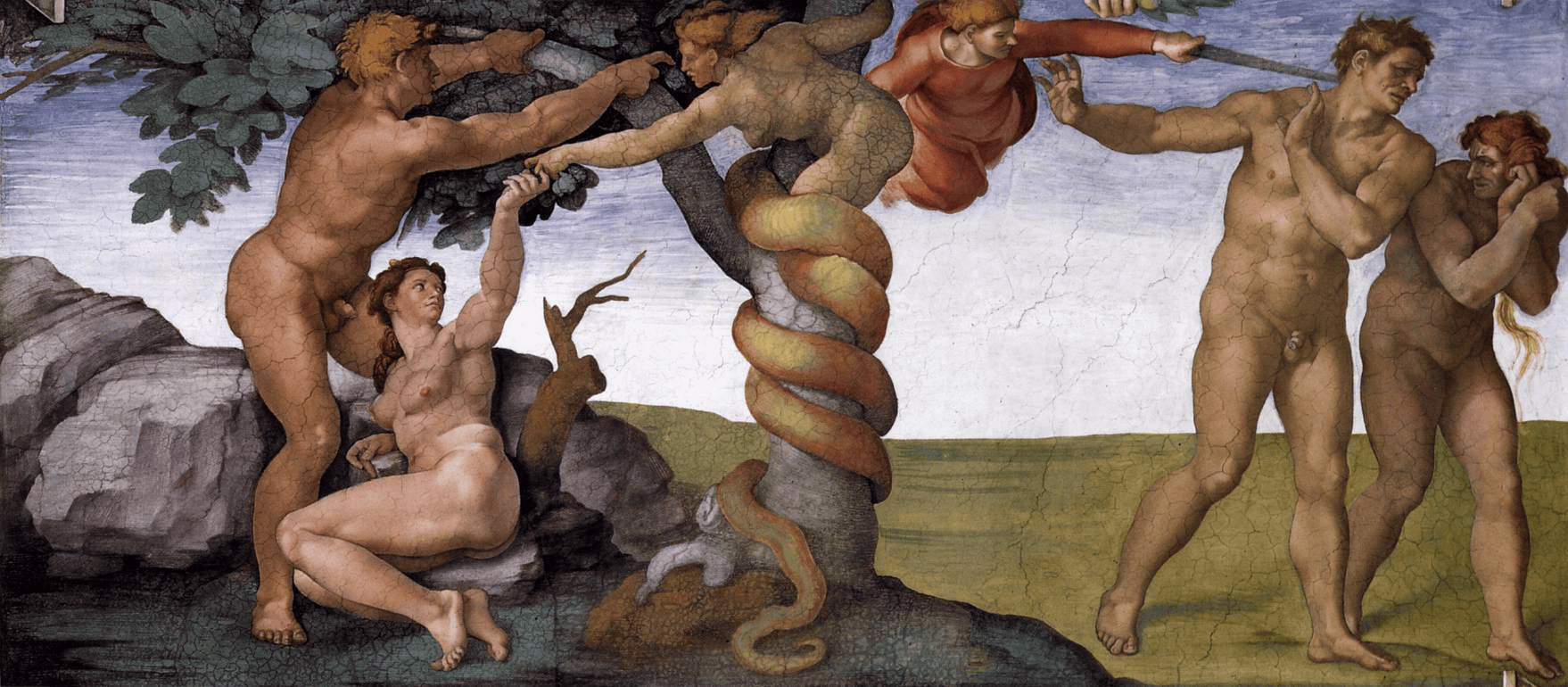
6. Biblical echoes, Beelzebub and Paradise Lost
Another vital influence is the Christian and epic tradition, especially Milton’s epic poem Paradise Lost (1667). Golding’s novel is full of fallen-world imagery. The island begins almost as Eden, a place of apparent beauty and abundance. Yet it soon becomes a stage for temptation, fear, bloodshed and expulsion from innocence.
The title itself points us toward this tradition. “Lord of the Flies” is a translation associated with Beelzebub, a name for the devil. The pig’s head on a stick isn’t only disgusting. It’s a “false idol”, a physical manifestation of corruption.
- High-level point: When it “speaks” to Simon, the head insists: “Fancy thinking the Beast was something you could hunt and kill!” This is one of the key moments in the novel. Evil is not external. It cannot be slain because it arises from within human consciousness itself. This is an “Augustinian” view of sin and human nature (so called, because of the writings of St Augustine).
The connection to Paradise Lost and Augustinian theology is important. Golding is asking an old question in modern form: is evil an external force, or is it rooted in human nature?
Simon, with his visionary insight and isolation, functions almost like a prophetic or Christ-like figure, the one boy who grasps the truth. His death is therefore not just tragic but symbolic. Human beings destroy the truth-bearer because truth is unbearable.
Quotes on Evil and the Beast
- “Fancy thinking the Beast was something you could hunt and kill!” – The Lord of the Flies reveals the truth that evil is internal.
- “You knew, didn’t you? I’m part of you?” – The pig’s head explicitly identifies the beast as part of human nature.
- “The pile of guts was a black blob of flies.” – The grotesque imagery reinforces the link to Beelzebub (‘Lord of the Flies’).
- “The half-shut eyes were dim with the infinite cynicism of adult life.” – Simon looking at the pig.
- “The beast was harmless and horrible; and the news must reach the others.” – Simon realises the truth about the parachutist, but is killed before revealing it.
7. Symbols that grow richer in context
To finish off, it’s worthwhile considering a couple more key symbols (Piggy’s glasses and the boys’ face paint) and how they relate to the context of Lord of the Flies.

Piggy’s glasses
Piggy’s glasses are one of the novel’s most important symbols because they combine science, rationality, insight and technological power. They help Piggy see physically, but they also stand for the intellectual clarity lacking in the others. Through them the boys make fire, so the glasses also represent humanity’s capacity to use knowledge productively.
Yet Golding gives that symbol a darker edge. The same scientific intelligence that makes fire possible also evokes the modern world that produced the atomic bomb. Post-Hiroshima, technology is never innocent. Piggy’s glasses therefore symbolise both enlightenment and danger: reason can sustain civilisation, but human beings can also weaponise intelligence.
When Jack’s tribe steals the glasses, it marks the capture of reason by violence. Power seizes the tools of civilisation while discarding its ethics.
- “His specs. Use them as burning glasses!” – Piggy’s glasses represent scientific knowledge and rational thinking.
- “Jack snatched the glasses off his face.” – The seizure of the glasses symbolises the capture of reason by violence.
- “Piggy’s glasses flew off and tinkled on the rocks.” – Their destruction signals the final collapse of rational order.
Face paint
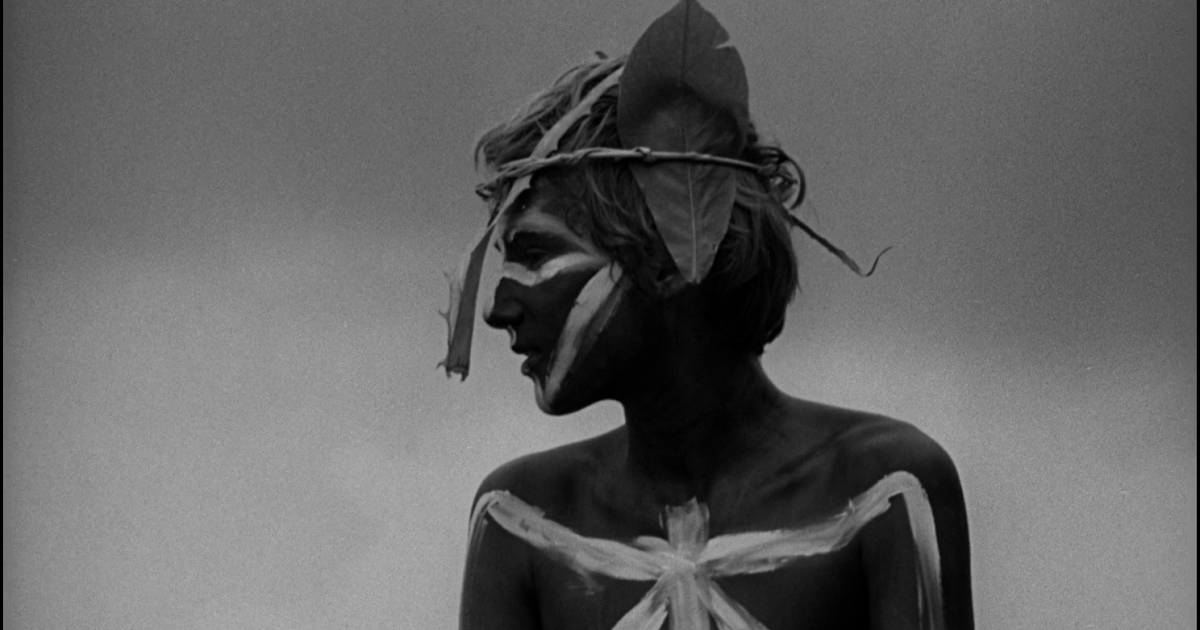
The face paint is psychologically brilliant. When Jack smears clay and charcoal over his face, Golding writes: “the mask was a thing on its own, behind which Jack hid, liberated from shame and self-consciousness.”
This description anticipates later psychological insights about anonymity, crowds and deindividuation. The paint does not create savagery from nothing, but it allows Jack to act without the inhibitions that his social identity once imposed.
In historical terms, the paint links to ritual, war and tribalism, but Golding is also making a point about modern mass politics. Military uniforms, insignia and collective identity can dissolve personal responsibility. That’s why face paint matters beyond the island.
- “The mask was a thing on its own.” – Jack’s painted face liberates him from shame.
- “Behind which Jack hid, liberated from shame and self-consciousness.” – Golding explicitly explains how anonymity enables savagery.
8. Golding’s deepest challenge: the “darkness of man’s heart”
The novel ends with Ralph weeping for “the end of innocence, the darkness of man’s heart.” This line is so famous that it risks becoming too familiar, but in context it is devastating.
Golding is not simply saying people can be bad. He is saying that modern history has stripped away the comforting illusion that evil belongs elsewhere, to enemies, to dictators, to savages, to monsters. The darkness is human, ordinary and internal.
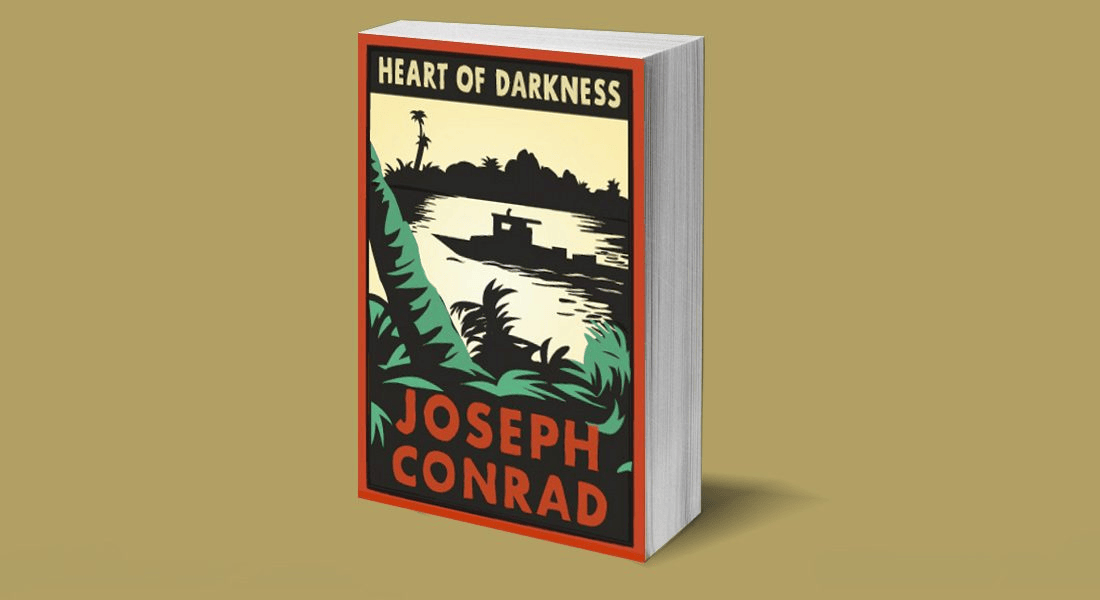
- Bonus: Research Joseph Conrad’s The Heart of Darkness (1899), the plot, and what themes this novel addresses. (Expect: the lines between civilisation and savagery, a critique on imperialism etc.). What links do you see with Lord of the Flies?
This core claim is why the novel remains so powerful. It’s a post-war novel, a Cold War novel, an anti-imperial novel, a reply to Victorian adventure fiction, a theological fable and a psychological study all at once. The context to Lord of the Flies doesn’t sit outside the text. It runs through it at every level.
The island is never just an island. The boys are never just boys. The beast is never just a beast.
Golding’s genius is that he makes all of those things feel frighteningly real.
Interested in tuition?
I provide personalised academic support for English, History and Philosophy. Get in touch to discuss your course and how I can support your studies.
2 thoughts on “Historical Context for Lord of the Flies: Your Ultimate GCSE and A Level Guide”