
If knowledge really were just justified true belief, philosophy students would have a much easier time of it.
Unfortunately for everyone involved, it isn’t.
In the last post, we looked at the tripartite definition of knowledge (or JTB knowledge) and why it initially looks so convincing. In this one, we’re dealing with what happens after Gettier ruins the party — and how philosophers have spent the last sixty years trying (and often failing) to fix the damage.
This part of the AQA course is dense, but it’s also where A Level Philosophy really starts to feel like proper philosophy. You’re no longer just learning theories; you’re watching them break.
Why Gettier Is Such a Big Deal (Quick Recap)
Gettier cases show that someone can have a belief that is:
- true
- justified
- genuinely believed
…and still not have knowledge.
The problem isn’t that the belief is irrational or careless — it’s that the truth comes about by luck.
Once that door is opened, the tripartite definition collapses. And so philosophers try to repair it.
Almost all post-Gettier theories follow the same strategy:
Keep truth and belief, but tinker with justification.
Let’s see how well that goes.
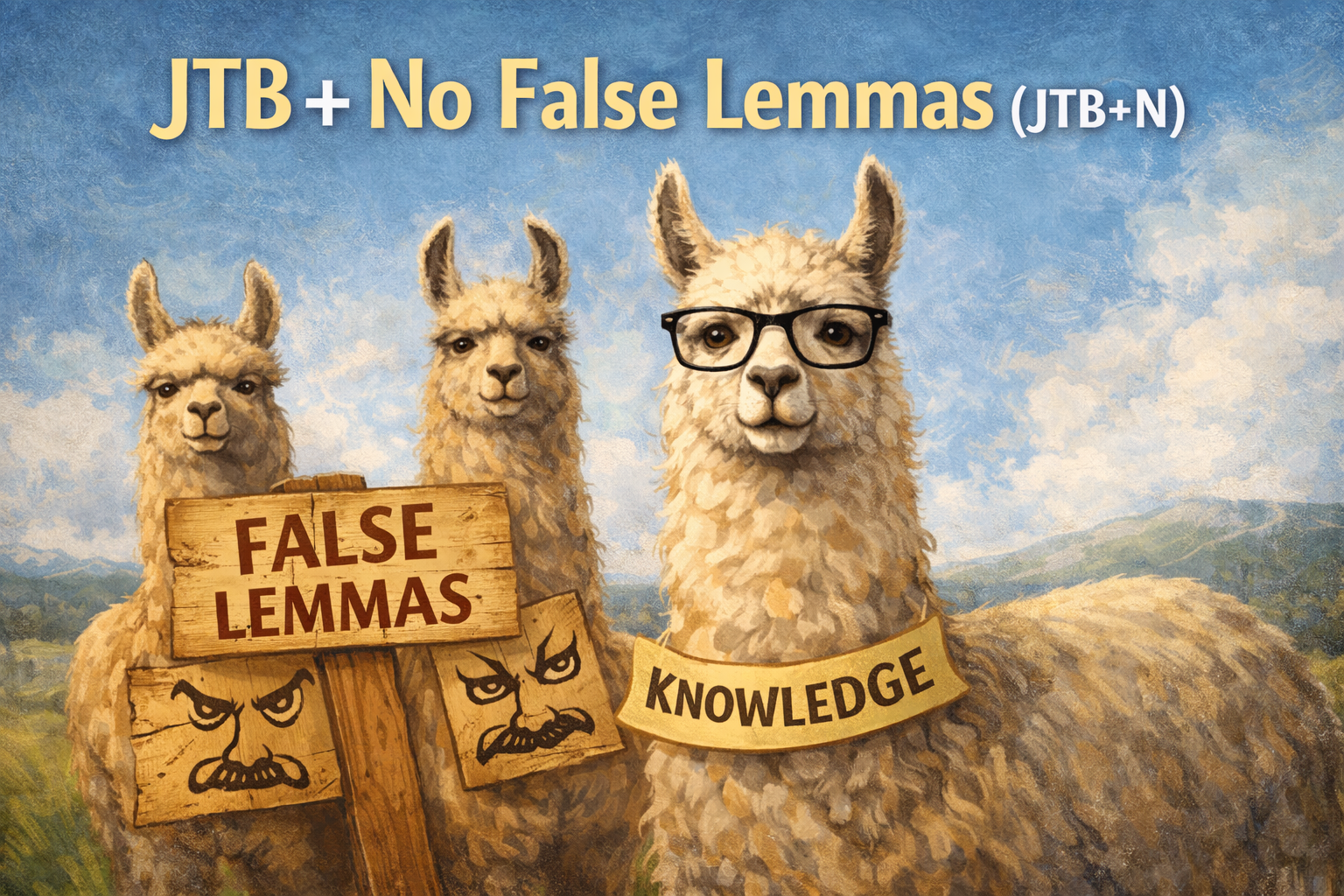
Attempt 1: JTB + No False Lemmas (JTB+N)
The most obvious fix is also the neatest.
The no false lemmas theory says:
S knows that p if and only if:
- p is true
- S believes that p
- S is justified in believing that p
- S did not infer p from anything false
In other words: your reasoning must not pass through a false step.
Why No False Lemmas Looks Promising
Take the classic Gettier job interview case.
Smith believes:
“The man who will get the job has ten coins in his pocket.”
His reasoning relies on the (false) belief that Jones will get the job. That false step — the false lemma — explains why the belief isn’t knowledge.
So:
- JTB wrongly counts Smith’s belief as knowledge
- JTB+N correctly rejects it
So far, so good.
📌 Exam pit-stop (12 marks)
Explain one of Gettier’s original counterexamples and explain how the addition of a “no false lemmas” condition responds to it.
As you revise this section, make sure you can:
- clearly explain the Gettier case
- explicitly identify the false lemma
- explain why adding the condition blocks that case

The Problem: Fake Barn County
Unfortunately, philosophy doesn’t reward optimism for long.
Imagine Henry driving through an area full of fake barns — convincing façades built by locals for… reasons best not questioned. Henry doesn’t know this.
Every time he looks at a fake barn and thinks “there’s a barn”, his belief is false.
But then — by pure luck — he looks at the one real barn and thinks the same thing.
This belief is:
- true
- based on perception
- not inferred from anything false
According to JTB+N, that should be knowledge.
But intuitively, it isn’t. Henry is just epistemically lucky.
So JTB+N improves on JTB — but still doesn’t solve the problem.
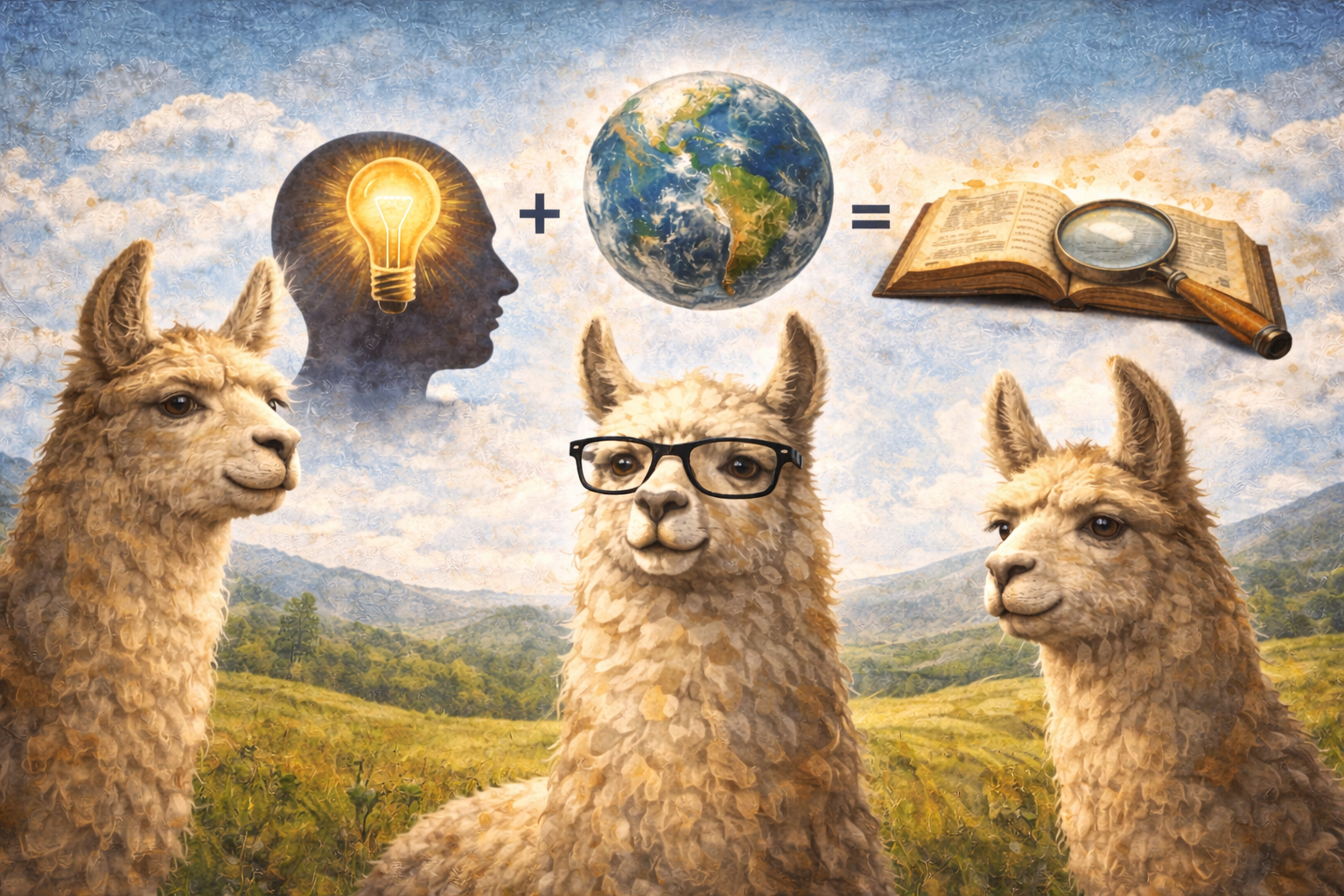
Attempt 2: Reliabilism (R + T + B)
Instead of focusing on reasons or inferences, reliabilism shifts attention to how the belief was formed.
Simple reliabilism says:
S knows that p if:
- p is true
- S believes that p
- S’s belief was formed by a reliable method
Reliable methods include things like:
- normal vision
- memory
- testimony
- introspection
Why Reliabilism Is Attractive
- It avoids over-intellectualising knowledge
- It allows children and animals to have knowledge
- It reflects how we actually form most beliefs
And it doesn’t require certainty.
📌 Exam pit-stop (5 marks)
Explain the reliabilist definition of knowledge.
This is a classic AO1 question — keep it tight and precise.
The Problem: Fake Barn County (Again)
Henry’s belief that “there’s a barn” is formed through vision, which is normally reliable.
Even though the environment is deceptive, the method itself hasn’t changed.
So reliabilism still counts Henry’s belief as knowledge.
That’s bad.
Nozick’s Upgrade: Truth-Tracking Reliabilism
Robert Nozick tries to fix this by making reliability more demanding.
He argues that knowledge requires truth-tracking.
S knows that p if:
- p is true
- S believes that p
- If p were false, S would not believe p
- If p were true, S would believe p
This is sometimes summarised as: your belief must track the truth across nearby possible situations.
Why This Solves Fake Barn County
In fake barn county:
- If the object weren’t a barn, Henry would still believe it was
- So his belief fails the truth-tracking condition
Good result.
The Cost: Denying Closure
Unfortunately, Nozick’s theory denies the epistemic closure principle:
If I know p, and I know that p implies q, then I know q.
Example:
- I know I have hands
- I know that if I have hands, then I’m not a brain in a vat
- Therefore, I know I’m not a brain in a vat
Closure says this inference is valid.
Nozick says it isn’t.
Why? Because:
- If I were a brain in a vat, I’d still believe I had hands
- So my belief doesn’t track the truth across possible worlds
This leads to deeply counter-intuitive results:
- You can know everyday facts
- But not know their obvious implications
Most philosophers see this as too high a price to pay.
Attempt 3: Infallibilism
Instead of loosening justification, it tightens it.
Infallibilism goes in the opposite direction.
For a belief to count as knowledge, it must be:
- true
- justified in a way that makes error impossible
This fits nicely with Cartesian ideas of certainty. (This refers to Descarte’s famous “Waves of Doubt” and his Cogito Ergo Sum).
Why Infallibilism Avoids Gettier
Smith’s belief in the Gettier case isn’t certain — he could be mistaken in all sorts of ways.
So infallibilism correctly denies him knowledge.
The Problem: Almost Nothing Counts as Knowledge
If certainty means no possible doubt, then:
- “Water boils at 100°C”
- “I have hands”
- “Paris is the capital of France”
…are all open to sceptical doubt.
This pushes us dangerously close to radical scepticism, where almost no knowledge claims survive.
So:
- JTB sets the bar too low
- Infallibilism sets it far too high
Attempt 4: Virtue Epistemology (V + T + B)
Virtue epistemology shifts focus away from rules and conditions, and onto the knower.
It says:
S knows that p if:
- p is true
- S believes that p
- S’s belief results from the exercise of intellectual virtues
Intellectual virtues include:
- good reasoning
- reliable perception
- intellectual honesty
- careful judgement
Why This Handles Gettier and Fake Barns
In Gettier cases, the belief is true by luck, not because the agent exercised intellectual virtue.
In fake barn county, Henry lacks the relevant virtue — the ability to distinguish real barns from fakes.
So virtue epistemology blocks both cases neatly. But is is completely watertight? Can you think of any problems with it?
- What exactly counts as an intellectual virtue?
Is it just whatever tends to produce true beliefs? If so, are we quietly sneaking reliability back in through the back door? - Can someone exercise intellectual virtue and still get lucky?
Imagine a thinker who reasons carefully, pays attention, and uses their faculties well — but happens to be in an unusually misleading environment. If their belief turns out true, is that knowledge, or just well-earned luck? - Is virtue epistemology explanatory or just re-labelling?
Saying “the belief is true because of virtue, not luck” sounds good — but students can ask whether this really explains why it’s knowledge, or just redescribes the intuition we already have.
📌 Exam pit-stop (12 marks)
Explain how an account of epistemic virtue can be used to show why Smith lacks knowledge in one of Gettier’s original counter-examples.

But Can Knowledge Be Defined at All?
At this point, things get uncomfortable.
Each fix works — until it doesn’t.
This is where Linda Zagzebski steps in. She essentially asks, is knowledge analysable at all?
She argues that any definition of the form:
JTB + X
will always be vulnerable to Gettier-style luck.
Her reasoning is devastatingly simple:
- Start with a justified false belief that satisfies X
- Add luck so the belief becomes true
- The result still won’t be knowledge
She even gives a recipe for generating Gettier cases.
The conclusion?
Knowledge may not be analyzable in this way at all.
Where Does That Leave Us?
Philosophers respond in three main ways:
- Knowledge is unanalysable — it’s a basic concept, like truth
- Strengthen justification until it entails truth (truth-tracking)
- Redefine knowledge as a relation, not a checklist (Zagzebski’s view)
Zagzebski herself suggests knowledge is a relation between a subject and reality, not something captured by necessary and sufficient conditions.
Whether that actually solves the problem… is very much up for debate.
Final Exam Focus
If you get an essay asking:
How should propositional knowledge be defined?
You should:
- explain JTB
- show why it fails
- assess at least two post-Gettier responses
- evaluate whether any definition really works
And yes — arguing that no definition succeeds is absolutely allowed.
Support my work
Have you found this post helpful? By contributing any amount, you help me create free study materials for students around the country. Thank you!
 AC studies