

Welcome to this installment of The Modern History Workshop, where we dive into history’s most fascinating leaders and historical periods. Whether you’re studying for A Levels or simply love history, this series will help you navigate the complexities of European society, history and politics.
Last time, we looked at Austrian Enlightened Absolutism. Today, we’ll focus on two Russian rulers who reshaped not only their country but the whole of Europe: Peter the Great and Catherine the Great.
These two towering figures exemplified the power of absolute monarchy, each leaving their mark in very different ways. Peter was a whirlwind of reform, dragging Russia into the modern world by sheer force of will. Catherine, while equally ambitious, wielded her influence with a mix of Enlightenment ideals and shrewd political manoeuvres. By examining their reigns, we’ll explore how their legacies transformed Russia into a global powerhouse—and how their reforms reflected broader European trends.
So, whether you’re prepping for exams or simply curious about what made these rulers so ‘Great,’ you’re in the right place.

The Importance of Peter and Catherine the Great
Peter the Great and Catherine the Great are two of Russia’s most significant rulers, each remembered for their efforts to modernise the Russian state and assert its place on the global stage. Both were autocrats, but their styles of leadership and approaches to reform differed in important ways. Peter, through force and ambition, laid the foundations of a stronger, Westernised Russia, while Catherine expanded upon those changes, blending Enlightenment ideals with her own autocratic vision.
Understanding the reigns of Peter and Catherine offers valuable insights not only into Russian history but also into broader themes like absolute monarchy, reform, and the balance between tradition and progress. Their legacies illustrate how rulers could shape a nation’s trajectory—and provide fascinating case studies for A Level History students exploring themes of power and governance.
Key Themes to Consider
As we explore Peter and Catherine’s reigns, keep these key themes in mind:
- Westernisation vs. Tradition: How did each ruler navigate the tensions between Russia’s traditional structures and the influence of Western Europe?
- Autocratic Power: Reflect on how Peter and Catherine maintained control while implementing sweeping reforms.
- Expansion and Diplomacy: Consider their roles in expanding Russian influence and how their foreign policies shaped Russia’s position in Europe.
Engaging with these themes will help you form well-rounded arguments, incorporating multiple perspectives—essential skills for both A Level History essays and future university study.
Setting the Scene: Russia Before Peter the Great
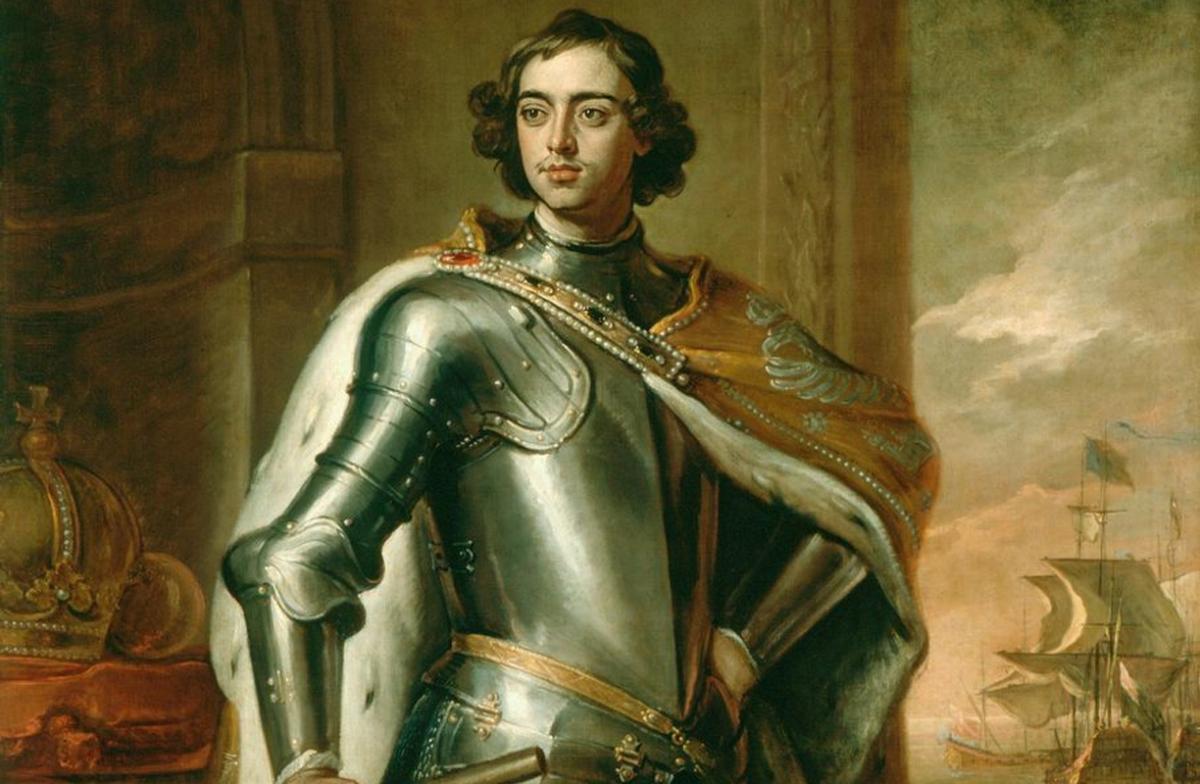
Before Peter the Great came to power in 1682, Russia was largely isolated from the rest of Europe. It largely maintained medieval traditions and structures while Western Europe was advancing rapidly in terms of technology, trade, and military power.
The Russian Tsardom had yet to embrace the intellectual, cultural, and technological developments that were revolutionising Europe during the Renaissance and early Enlightenment. This isolation left Russia lagging behind its Western neighbours in many areas, including military power and economic strength.
Peter, determined to change this, embarked on an ambitious campaign to “Westernise” Russia. His reign would fundamentally alter Russia’s course, steering it towards becoming a major European power.
Peter the Great’s Vision: Westernisation and Reform
Peter the Great (1672–1725) is best known for his efforts to modernise Russia, which were often drastic and met with resistance. Inspired by his travels in Western Europe—most notably during the Grand Embassy of 1697–98—Peter saw the need to transform Russia’s military, economy, and society to compete with European powers like Sweden and France.
One of his first major undertakings was the modernisation of the Russian army and navy. Peter recognised that military strength was essential to expanding Russia’s influence, especially in the Baltic and Black Sea regions. By introducing Western military techniques and recruiting foreign experts, Peter was able to build a powerful navy, which would play a crucial role in the Great Northern War (1700–1721). This conflict ultimately secured Russian access to the Baltic Sea, a key step in establishing Russia as a major European player.
But Peter’s reforms went beyond military matters. He introduced sweeping changes to the Russian government, economy, and society. In 1703, he founded the city of Saint Petersburg—Russia’s “window to the West”—which became the new capital and a symbol of Russia’s Westernisation. He also mandated Western-style clothing for the nobility, reformed the Orthodox Church to bring it under state control, and created new governmental structures to centralise power.
However, Peter’s reforms came at a great cost. His relentless push for modernisation and his use of harsh methods—including forced labour and heavy taxation—led to widespread unrest among the Russian population. Yet despite these challenges, Peter’s reign marked a turning point in Russian history, transforming the nation into a formidable European power.
Catherine the Great: Enlightened Autocrat or Ruthless Ruler?

Catherine the Great (1729–1796) continued Peter’s legacy of reform and expansion, though she did so with a different approach. Born a German princess, Catherine married into the Russian royal family and became Empress in 1762 after the overthrow of her husband, Peter III. Her reign is often characterised as the pinnacle of the Russian Enlightenment, a period in which Russia adopted Enlightenment ideals while maintaining its autocratic governance.
Catherine was a great admirer of the French philosophes, particularly Voltaire and Diderot, and corresponded with them regularly. She sought to modernise Russia’s legal and educational systems, using Enlightenment principles as her guide. One of her most ambitious projects was the creation of the Nakaz, or Instruction, in 1767, which aimed to reform Russia’s legal code. The Nakaz drew on Enlightenment ideas of justice and equality, calling for the abolition of torture and capital punishment and emphasising the need for laws that protected all subjects, regardless of social class.
Despite these lofty ideals, Catherine was, at her core, an autocrat. Her reforms often prioritised maintaining the power of the monarchy and suppressing any threats to her rule. For example, while she initially flirted with ideas of serfdom reform, she ultimately expanded serfdom in Russia, binding more peasants to the land in exchange for the loyalty of the nobility. This decision highlighted the tension between Catherine’s Enlightenment ideals and the practical realities of maintaining power in an absolute monarchy.
Catherine the Great’s Foreign Policy and Expansion
Like Peter, Catherine sought to expand Russian territory and influence. Her foreign policy was marked by a series of military successes, including the annexation of Crimea in 1783 and victories against the Ottoman Empire in the Russo-Turkish Wars (1768–74, 1787–92). These conquests solidified Russia’s position as a dominant power in Eastern Europe and gave Russia access to the Black Sea, further enhancing its trade and military capabilities.
Catherine also played a significant role in the partitions of Poland (1772, 1793, and 1795), which resulted in Russia gaining a large portion of Polish territory. These partitions not only expanded the Russian Empire but also weakened one of its key rivals in Eastern Europe.
The Legacy of Peter and Catherine the Great: In Summary
Peter and Catherine the Great stand out as two of the most influential figures in Russian history, shaping the nation’s trajectory as a European power. Peter’s aggressive push for Westernisation, including military reform and the establishment of Saint Petersburg, modernised Russia and opened it up to European influence. Catherine, equally ambitious, expanded the empire’s borders and pursued enlightened reforms, though always with a focus on maintaining her autocratic control.
Together, their reigns marked a turning point where Russia not only solidified its status as a major European power but also became a cultural and political force to be reckoned with. Their legacies laid the groundwork for future Russian rulers, influencing both domestic governance and the country’s place on the European stage for centuries to come.
Key Takeaways: Peter and Catherine the Great

- Peter’s Westernisation: Peter the Great’s reign (1682–1725) marked the beginning of Russia’s transformation into a European power. His reforms modernised the army, navy, and government, but often at the cost of widespread unrest.
- Catherine’s Enlightenment: Catherine the Great’s reign (1762–1796) is often seen as the height of Russian Enlightenment. She sought to reform Russia’s laws and society, though her commitment to autocracy limited the extent of these changes.
- Military and Territorial Expansion: Both rulers expanded Russia’s territory—Peter through victories in the Great Northern War and Catherine through her conquests of Crimea and her role in the partitions of Poland.
- Autocracy and Reform: While both rulers embraced reforms, they maintained tight control over the state. Peter’s methods were often harsh and militaristic, while Catherine blended Enlightenment ideals with a pragmatic approach to ruling a vast and diverse empire.
Further Resources for Deeper Understanding
If this topic sparked your interest, here are some videos and podcasts to deepen your understanding, along with questions to consider as you watch and listen.
Videos and Podcasts
- The Enlightenment: Crash Course European History: This episode introduces key Enlightenment thinkers like Voltaire, Montesquieu, and Rousseau, whose ideas significantly influenced European rulers, including Catherine the Great.
- Catherine the Great: Russia’s Greatest Empress: This documentary explores the life and reign of Catherine the Great, showcasing how her policies shaped Russia and brought Enlightenment principles into her rule.
- Peter the Great – History of Russia in 100 Minutes: A very brief introduction into Peter’s efforts to modernise Russia and his impact on Russian society.
- In Our Time: Catherine the Great: Melvyn Bragg and guests delve into Catherine the Great’s ambitions to reform Russia, aligning it with the ideals of the French Enlightenment and European progress.
- In Our Time: The Complete Enlightenment Archive: A comprehensive archive of discussions covering the Enlightenment era, its major thinkers, and its transformative impact on Europe and beyond.
Questions for Reflection
- How did Peter and Catherine’s reforms reflect broader European trends during their reigns?
- In what ways did Catherine the Great’s policies blend Enlightenment ideals with practical autocracy?
- How did the military and territorial expansions of Peter and Catherine influence Russia’s standing in Europe?
- How did Peter and Catherine’s visions for Russia differ in terms of their approaches to reform and governance?
- To what extent did both rulers succeed in balancing the needs of the state with the desires of their people?
What are your thoughts? Join the discussion in the comments below!
The Modern History Workshop: Your Introduction to Degree-Level Study
The Modern History Workshop provides snapshots of Modern European History through this series of thought-provoking mini introductions. Stay tuned for our next post, “Louis XV: The Decay of Monarchy”, where we’ll explore the decline of royal authority in France, setting the stage for one of the most significant events in European history: the French Revolution.
If you need help with university applications, GCSE or A Level studies, reach out for expert academic tuition. With almost 10 years experience as a personal tutor, an MA from St Andrews University and an M.Phil from Bristol University, I’m here to help. Let’s build your knowledge, skills and confidence together.
Support my work
Have you found this post helpful? By contributing any amount, you help me create free study materials for students around the country. Thank you!
 AC studies